


Tiny black bugs in a bathroom sink are almost always drain flies (fuzzy, winged) or springtails (wingless, they jump). Regular cleaning is the first line of defense and prevents most cases. If they keep returning despite a consistent routine, look at the plumbing: slime left on the drain walls and trap, a dried-out trap seal, or a leak or failed flange keeping things damp. Fix those, and use the right drain parts at installation, to stop the cycle.
If you are searching for tiny black bugs in the bathroom sink, you have probably already cleaned the drain and watched them come back. That is frustrating, and it is not necessarily a hygiene failure. These pests need moisture and, for drain flies, a slimy film to breed in, and a sink can supply both in places surface cleaning does not reach.
This guide is for homeowners and renovators in the US and UK. It shows how to identify the bug, explains the plumbing-related root causes, gives a step-by-step removal plan, and then shows how careful planning and the right parts at installation reduce the chance of it happening again.
- Winged, fuzzy and moth-like means drain fly. Wingless and jumping means springtail. They need different fixes.
- Drain fly larvae feed on slime in drains. The egg to adult cycle runs roughly 12 to 19 days, so repeat cleaning for about two weeks.
- Regular scheduled cleaning is recommended even when drains look clean. Scrub first, because pouring cleaner down a drain without scrubbing does not remove the breeding conditions.
- If bugs return despite regular cleaning, suspect a problem in the installed parts, such as a leaking joint or failed flange.
- A rarely used drain can lose the water in its trap. Flushing it weekly with about a gallon of water keeps the trap full.
- Springtails (about 1/16 to 1/8 inch) signal moisture. Fix leaks and dry the area, because pesticides are not effective against them.
- Identifying the Bug: Drain Flies vs Springtails
- Why They Keep Coming Back: The Root Cause
- How to Get Rid of Them Now
- Regular Cleaning: Your First Line of Defense
- Fix It at the Source: Plan and Install It Right
- When to Call a Plumber
- FAQ
Identifying the Bug: Drain Flies vs Springtails
Two different pests turn up as tiny black bugs in a bathroom sink, and the first job is telling them apart. The quickest test: does it have wings, and does it jump? Compare what you are seeing with the diagram and table below.
Simplified illustrations, not to scale. Real bugs are tiny, so look closely.
Drain flies (with wings)
Drain flies, also called moth flies, are small, fuzzy, dark flies with bodies and wings covered in fine hairs. At rest they hold their wings roof-like over the body, which gives them a moth-like look. Their larvae are legless and grey, and they live in the muck and slime that builds up in drains, according to NC State Extension.
Springtails (no wings, they jump)
Springtails are wingless, slender bugs in brown, grey or black, about 1/16 to 1/8 inch long (roughly 1.6 to 3 mm). Their giveaway is the jump: a forked structure under the abdomen lets them leap up to several inches. They do not bite or sting, and they do not damage food, clothing or furniture, according to the University of Minnesota Extension.
| Check | Drain fly | Springtail |
|---|---|---|
| Wings | Yes, hairy, held roof-like | No wings |
| Movement | Flies | Hops when disturbed |
| Size | Tiny, moth-like | About 1/16 to 1/8 inch |
| Breeds in | Slime and organic buildup in drains | Damp areas, leaks and overwatered soil |
| Main fix | Scrub the drain and clean the trap | Remove the moisture |
Why They Keep Coming Back: The Root Cause
Both pests depend on dampness, and a bathroom sink can hold it in places regular wiping never touches. NC State Extension reports that drain fly eggs usually hatch in under two days, larvae mature in 9 to 15 days and pupae become adults in 1 to 2 days. If the slime they feed on is left in place, the cycle simply restarts.
That is why cleaning alone often fails. Pest-control guidance in PCT Online says pouring cleaners or biological agents into a drain without scrubbing first is not effective and will not remove the conditions flies breed in. Here are the root causes to check.
1. Slime left on the drain walls and in the trap
Drain flies breed in accumulations of slime that coat drain walls, as the Texas A&M school IPM program explains. Organic solids also build up on pipe walls and under catch baskets over time. The visible part of a bathroom drain is only the start: the stopper, the overflow opening, the tailpiece and the trap are all part of the same wet system. Hunker notes that drain flies lay eggs in the gunk that builds up in the pipes and can emerge from a bathroom sink's overflow hole, so slime in any of these places can keep breeding going.
2. A dried-out trap seal
The curved P-trap under the sink holds a plug of water. Cornell's NYS IPM program notes that trap seals fail when drains are infrequently used and the water evaporates, and that clogged, scummy drains are breeding sites for flies. Texas A&M recommends flushing infrequently used drains weekly with a gallon or so of water to keep water in the trap. A sink in a guest bathroom that is rarely used is a typical example. For reference, the ICC Building Safety Journal notes that the International Plumbing Code requires each fixture trap to have a liquid seal of at least 2 inches and not more than 4 inches. In the UK, a basin trap typically needs a minimum water seal of 75mm, according to UK supplier Drainage Pipe. Our rough-in guide covers the code figures for US and UK homes.

The trap that holds the seal
What a P-Trap Looks Like
The curve at the bottom is the trap, where the water seal sits. This solid brass P-trap comes with a push-up pop-up drain that needs no separate stopper, and it fits sink holes from about 1.64 to 1.9 inches. If the trap is a visible, finished part like this one, it is also easy to spot a drip.
3. Leaks, loose joints and failed flanges
PCT Online notes that failed flanges or cracked pipes can let wash water escape into surrounding spaces. Springtails, in turn, gather where there is high moisture and condensation, such as around plumbing leaks in bathrooms, kitchens and basements. A loose slip joint, a flange that is not sealed properly or a slow drip under the faucet can keep the space beneath the sink damp.
4. Food and debris in and around the drain
In kitchen sinks especially, Texas A&M notes that food waste and debris build up in and around drains and feed the problem. A strainer that catches scraps before they enter the pipe removes that food source.
| What you notice | Likely root cause | What to do |
|---|---|---|
| Flies return within weeks of cleaning | Slime left on drain walls or in the trap | Scrub first, then clean the trap |
| Bugs near a rarely used sink or drain | Dried-out trap seal | Flush weekly with about a gallon of water |
| Springtails near the vanity base | Plumbing leak or condensation | Find the leak, fix it and dry the area |
| Damp under the sink at the drain | Loose joint or failed flange | Tighten, reseal or replace the part |
| Food scraps collecting at a kitchen drain | No strainer | Fit a basket strainer and rinse it daily |
How to Get Rid of Them Now
Start with a clean-out to stop the cycle, then work through the root causes above. NC State Extension calls cleaning toilets, drainpipes and traps of organic buildup the most effective approach, and notes that aerosol sprays give only temporary relief because they do not fix the source.
Drain flies: step by step
- Confirm the source. Texas A&M suggests leaving a piece of sticky tape over the drain overnight. Flies that stick to it reveal where the infestation is coming from. Hunker suggests taping over the overflow hole as well.
- Scrub the drain. Remove the stopper or strainer and scrub the drain walls with a stiff, long-handled brush. NC State and PCT Online both put scrubbing first, before any cleaner. Hunker uses a drain stick to clear residue from the overflow hole, and a narrow brush can do the same job.
- Clean the trap. Remove the trap if you can reach it, or use a plumber's snake on a clogged drain, as NC State advises.
- Flush the line. NC State suggests flushing the lines with boiling water after mechanical cleaning. Check your pipe material and the manufacturer's guidance first.
- Optional: add a biological drain gel. Texas A&M recommends bacterial gel products to eat away slime buildup, used after scrubbing, not instead of it.
- Repeat for about two weeks. Because the cycle from egg to adult runs roughly 12 to 19 days by NC State's figures, repeat every few days until no new flies appear.
Springtails: remove the moisture
Springtails respond to moisture control, not sprays. The University of Minnesota Extension states that moisture control is the most effective option, that populations usually decline once moisture is reduced, and that pesticides are not effective against springtails and should not be used indoors.
- Find the leak or damp spot. Check under the sink and around the vanity base for plumbing leaks or condensation.
- Dry the area. Use a fan or dehumidifier, and remove wet or moldy material.
- Check houseplants. Overwatered soil is a common source, so let it dry out and water less often but more deeply.
- Remove the few you can see. Wipe them away or use a vacuum.
Regular Cleaning: Your First Line of Defense
Before blaming the plumbing, make sure the basics are covered. Regular cleaning prevents most of these infestations, because it removes the slime and debris that drain flies breed in before a new generation can develop. PCT Online recommends regular scheduled drain cleaning even when drains look clean, since buildup accumulates out of sight. The sources do not agree on one exact interval, so the routine below is our suggestion rather than a fixed rule.
Simple Cleaning Routine
- Weekly: remove the stopper or strainer and scrub the drain walls with a stiff brush
- Weekly: wipe the sink and drain area dry, so less moisture is left behind
- Weekly: flush rarely used sinks and drains with about a gallon of water, so the trap stays full
- Daily in kitchens: empty and rinse the strainer basket so food scraps do not sit in the drain
- After scrubbing, as an optional extra: use a biological drain gel to break down remaining slime
- Monthly: look under the sink for drips, damp or a loose connection
Cleaning and installation work together. A good routine keeps even a poorly fitted drain mostly under control, and a well-installed drain makes the routine quicker and more effective. If you keep up regular cleaning and the bugs still return, the cause is more likely a problem in the installed parts, which is what the next section covers.
Fix It at the Source: Plan and Install It Right
Regular cleaning handles the day-to-day, and the strongest long-term fix happens before the bugs arrive. If you are renovating, replacing a vanity or swapping drain parts, use the checklist below as your brief. Some items come from the sources above, and the rest are good installation practice to confirm with your plumber.
Install-Right Checklist
- Choose a drain and stopper made for your basin, and seal the flange as the manufacturer instructs (plumber's putty or silicone)
- Tighten every joint and check for drips after running water for a couple of minutes
- Leave clear access under the vanity so the trap can be reached and cleaned
- Follow code for the trap arm slope (1/4 inch per foot toward the vent, as in 24 CFR 3280.606) and vent distance, as set out in our rough-in guide
- Fit a strainer to catch debris before it enters the pipe
- Flush rarely used sinks and drains weekly with about a gallon of water, so the trap stays full
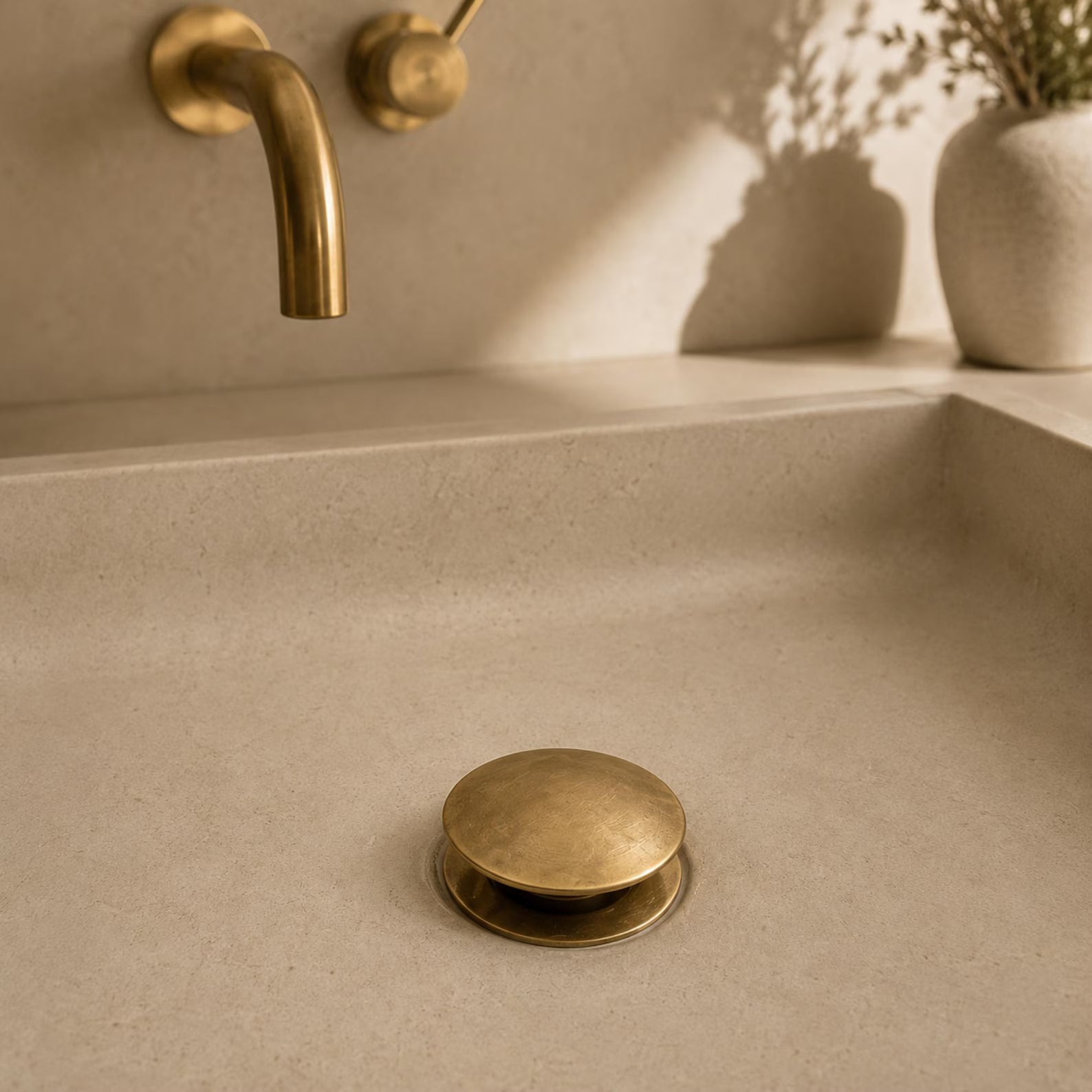
The right part matters
Match the Drain to the Basin
Choose a stopper and overflow assembly made for your basin, and seal the flange as the manufacturer instructs. Check the product page for sizing before you order, so the parts fit the drain hole and sit properly.
The parts you choose affect how easy the drain is to keep clean and how likely it is to leak. Browse our brass and copper strainers and flanges or the wider drains and hardware collection to match your sink and faucet.
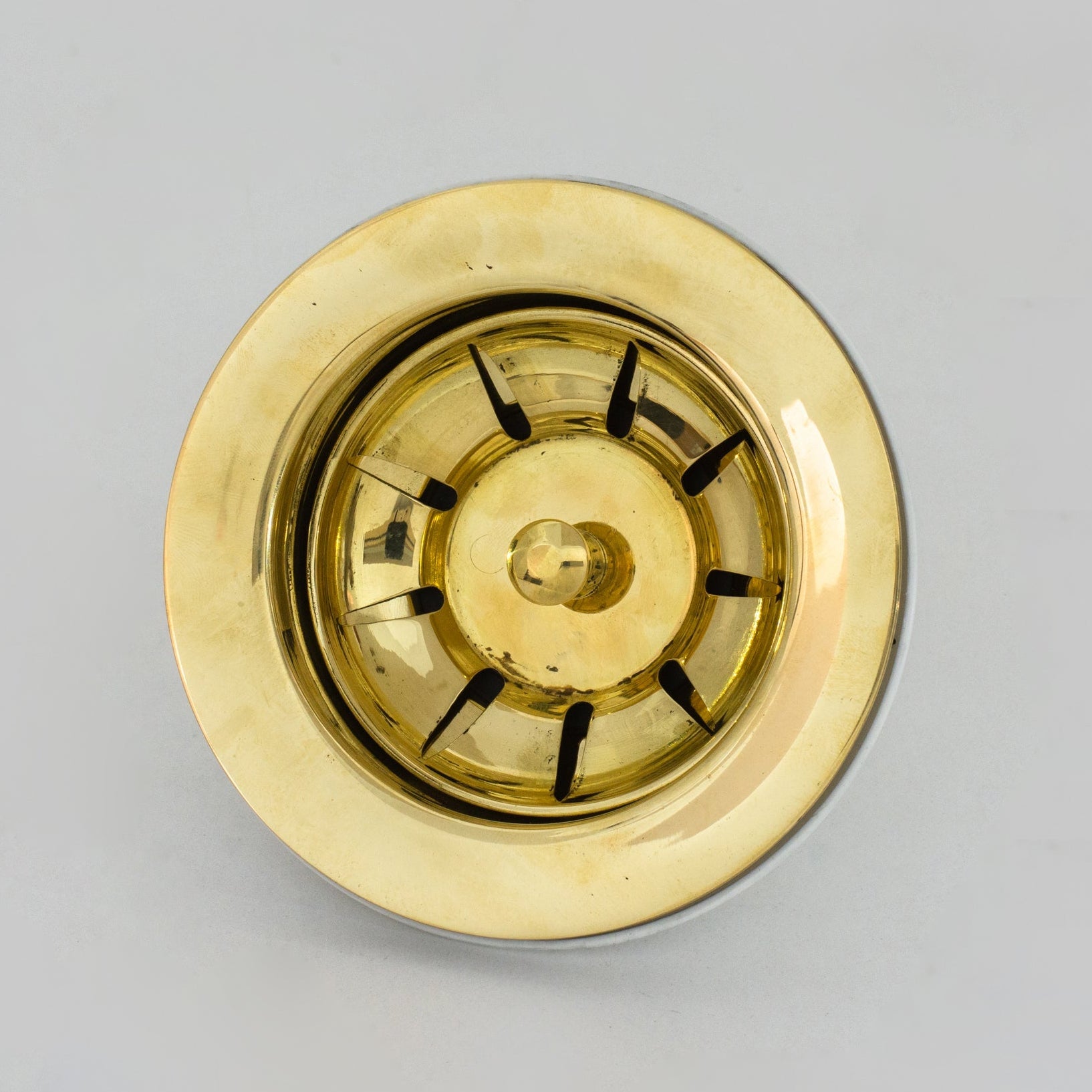
A Strainer That Catches the Food
Food waste and debris that build up in and around drains add to the problem, according to Texas A&M's school IPM program. A basket strainer keeps scraps out of the pipe. It fits standard US sinks with a 3.25 inch drain opening. Empty and rinse it daily.
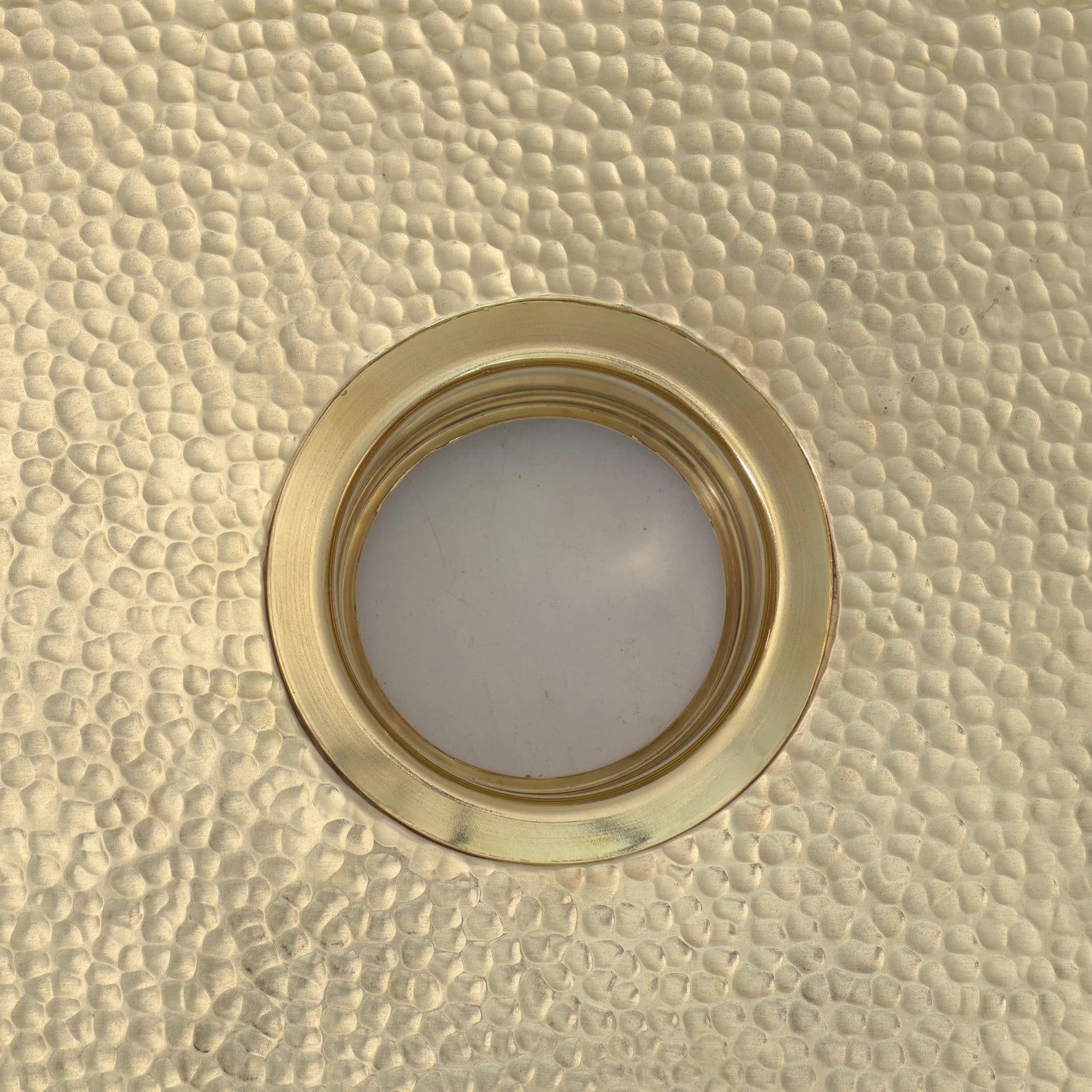
A Flange That Seals Properly
A failed or loose flange can let wash water escape into the cabinet below, so it is worth replacing a worn one. This kit is made for standard 3 1/2 inch garbage disposal units and drops in.
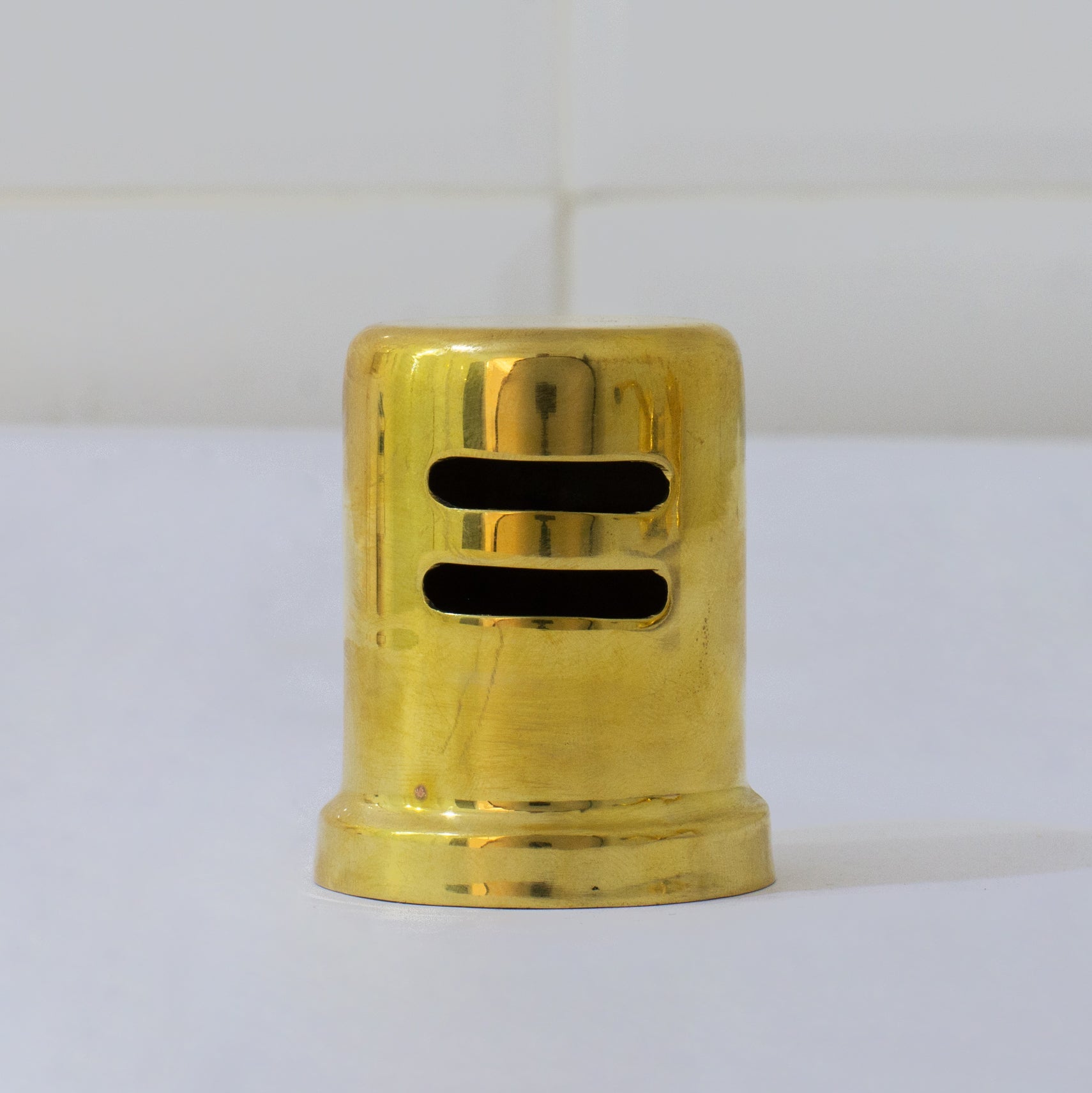
Finish the Air Gap Too
If your kitchen has a dishwasher air gap beside the faucet, this skirted cap slides over a standard air gap body and finishes it in matching brass, so the whole drain-side set looks consistent.
If you are replacing a faucet at the same time, our guide to replacing a bathroom faucet covers matching drains and traps, and our guide to fixing a dripping faucet or tap helps you remove a common source of constant damp. If you are installing a wall-mounted basin, where the trap is fully visible, see how to install a wall-mount sink.
When to Call a Plumber
If you have scrubbed the drain, cleaned the trap, kept it filled and fixed any visible leaks, and the bugs keep coming back, the problem may be somewhere you cannot reach. Call a plumber if you find a leak you cannot fix, cannot reach the trap, or see bugs at several drains at once. If you suspect a wider infestation, contact a licensed pest control professional.
What are the tiny black bugs in my bathroom sink?
They are usually drain flies or springtails. Drain flies are fuzzy, moth-like flies that rest with their wings held roof-like over the body. Springtails have no wings and hop when disturbed. Both are drawn to damp conditions, and neither is dangerous to people.
Why do drain flies keep coming back after I clean?
Cleaning often misses the slime on the drain walls and in the trap. Pest-control guidance notes that pouring cleaners into a drain without scrubbing first does not remove the conditions flies breed in. A rarely used drain can also dry out its trap seal. Scrub first, then keep the trap full.
How do I get rid of drain flies in a bathroom sink?
Remove the source. Take out the stopper, scrub the drain walls with a stiff brush, clean the trap, then flush with very hot water. Repeat for about two weeks, because the egg to adult cycle takes roughly that long. Sprays only give temporary relief and do not fix the cause.
What are the tiny black bugs that jump in my sink?
Jumping bugs with no wings are almost always springtails, about 1/16 to 1/8 inch long. They leap several inches and signal excess moisture, such as a leak or an overwatered houseplant. Fix the moisture and their numbers usually fall without any pesticide.
Can bad plumbing or installation cause bugs in the sink?
It can contribute. A failed flange or leaking joint keeps the cabinet damp, a dried-out trap seal lets pests in, and a drain you cannot reach for scrubbing keeps its slime. Proper parts and careful installation reduce these conditions, but regular cleaning is still needed.
The Bottom Line on Tiny Black Bugs in the Bathroom Sink
Tiny black bugs in a bathroom sink are a symptom, so treat the cause. Identify the pest, keep up regular cleaning to remove the slime or moisture it depends on, and if the problem returns anyway, look at how the drain was planned and installed: a sealed flange, access to the trap, the right parts and a trap that stays full. Regular cleaning keeps them away day to day, and good installation helps stop them coming back.
Start with the right parts. Shop Drains & Hardware or browse strainers and flanges, handmade in solid brass and copper in Marrakech. Need help matching parts to your sink? Email [email protected].
This guide is general home-care advice. Plumbing codes vary by country and locality, so confirm requirements with your local authority or a licensed plumber.


