


The patina is not something that happens to the brass. It is the brass, changing colour as it lives in your home.
Brass patina is the thin coloured layer that forms on the surface of unlacquered brass as the metal reacts with air, moisture, and the touch of daily use. It is not dirt, and it is not damage. It is the finish doing exactly what solid unlacquered brass is designed to do: shift slowly from bright gold to warm honey to a deeper aged brown over months of use.
Understanding what the brass patina actually is changes how you treat it. Once you can tell the natural finish apart from an actual problem, you stop fighting the colour change and start working with it. This guide explains what the patina is, how it forms, the colour stages to expect, and how to protect it. It is written for anyone who owns or is considering unlacquered brass and wants to read the surface correctly.
If your fixtures are tarnished or you want to restore bright brass rather than understand the patina, that is a different job. Our separate guide covers 5 tested brass cleaning methods for exactly that.
- Brass patina is a thin oxide layer, a protective film on the metal, not tarnish to be scrubbed off
- It forms because brass is a copper alloy (typically 60 to 70 percent copper), and copper reacts with air and moisture
- The colour moves through stages: bright gold, warm honey, amber, then deep brown, usually over the first three to six months
- Uneven colour is normal. High-touch areas like handle bases darken faster than spouts
- Indoor brass rarely turns green. That is a separate, humidity-driven reaction, not standard patina
- To protect the patina, keep abrasives, bleach, and ammonia sprays away entirely. For safe cleaning, follow the method in our tested cleaning guide
What is brass patina?
Brass is an alloy, usually somewhere between 60 and 70 percent copper with the remainder mostly zinc. The patina forms on the copper content. When the copper at the surface meets oxygen, moisture, and the oils from your hands, it oxidises, producing a fine layer of copper oxides and related compounds. That layer is what you see as the changing colour, and it sits on the surface as a stable film rather than eating into the metal.
This is the key point most people miss: the patina is protective. The Copper Development Association notes that the film which forms naturally on copper and its alloys is in fact a protective barrier against further corrosion. So the darkening you notice is not the brass degrading. It is the brass building its own shield and settling into its long-term colour.
"Received my copper shower rose today. Wow it's beautiful, the workmanship is excellent. It's solid not flimsy. It matched the description perfectly. Very happy customer."
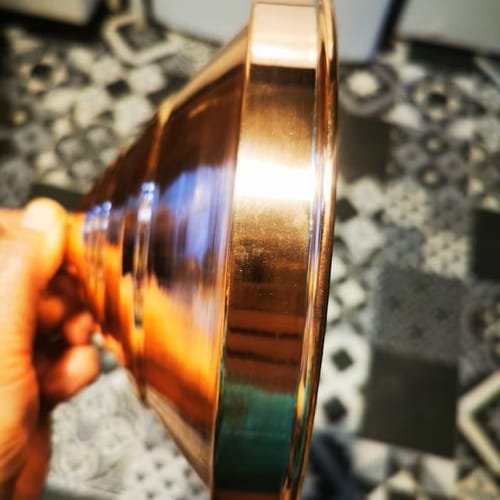
That solidity Jacqueline describes matters for the patina. Because the metal is solid brass or copper throughout, the colour change is a surface reaction in genuine metal, not wear on a thin plated coating. A patina on solid brass has real depth. A colour change on a plated fixture is often the coating failing.
Does brass patina naturally? How the finish forms
Yes, unlacquered brass patinas on its own with no help from you. The three ingredients are always present in a normal home: air, moisture, and contact. Kitchen and bathroom fixtures patina fastest because they meet all three constantly, through splashes, steam, and hands. A brass piece in a dry, low-touch spot changes more slowly, but it still changes.
The word "unlacquered" is the whole story here. Lacquered brass is sealed under a clear coat that blocks air and moisture, so it stays bright and does not patina until that coat wears through. Unlacquered brass has no barrier, so the reaction is free to happen. If you want the full trade-off between the two, our lacquered vs unlacquered brass comparison covers it in detail.
The colour stages of brass patina
Brass patina is not a single colour. It moves through a sequence, and knowing the sequence tells you where your fixture is in its life. The exact timing depends on how much the piece is used and the moisture in the room, but the order is consistent.
| Stage | Colour | Typical timing |
|---|---|---|
| New | Bright polished gold | Day one |
| Early | Softening, warm honey tone | First few weeks |
| Developing | Amber to light brown | Three to six months |
| Settled | Deep aged brown with darker recesses | A year and beyond |
These timings are typical ranges based on fixtures in normal daily use, not fixed rules, so treat them as a guide rather than a schedule. For a fuller month-by-month view of how a piece ages across its whole life, see our foundations guide on unlacquered brass and how it ages.
"The brass is great, rich looking and it functions well!"

How long does brass take to patina?
You will usually see the first shift within the first few weeks, as the bright polish softens into a warmer tone. Meaningful colour develops over the first three to six months, and the finish keeps deepening for a year or more before it settles into its long-term look. High-use kitchen fixtures move fastest. Low-touch decorative pieces take longer.
There is no way to pause the process at a stage you like without adding a barrier, which we cover below. Left alone, the patina simply continues to mature, which is the point of choosing unlacquered brass in the first place.
"Beautiful item with quick shipping and excellent customer service for the small issue I had! Abel is very responsive and kind and willing to serve his customers well. Thank you for a great product, our bathroom looks amazing!"

Natural vs forced patina
A natural patina forms on its own through time and use, exactly as described above. A forced patina is one sped up on purpose with chemicals such as ammonia fumes, sulphur compounds, or a vinegar and salt solution. The Copper Development Association confirms that chemical treatments are commonly used to accelerate patina on copper alloys, mainly in architecture and art where a specific aged look is wanted quickly.
For fixtures in a home, we recommend letting the patina come naturally. Forced patina can look uneven, does not always match how the piece would age in your specific room, and skips the slow character that makes a living finish worth having. If you have chosen unlacquered brass, the most rewarding path is simply to use it and let the room write its story onto the metal.
"Really beautiful vintage inspired piece that fit in perfectly with our historic home."

Normal vs a problem: how to read your brass patina
Most of what people worry about is entirely normal. A degree of unevenness is expected and desirable: the base of the handles darkens faster than the spout because hands touch it constantly, and areas that get splashed age differently from areas that stay dry. This variation is what gives each piece its character. It is the metal recording how the fixture is actually used.
Green spots are a different category. They occasionally appear in very humid environments or on fixtures in coastal properties, and they are not standard patina. The short version is that they are not permanent and lift easily with a halved lemon held on the spot for two minutes then rinsed thoroughly. We cover this fully in our guide on whether unlacquered brass turns green. In a normal kitchen or bathroom with regular drying, green spots essentially never occur.
A genuinely bright, blotchy patch usually means a cleaning product stripped the patina in that spot. This is fixable and not permanent: the bright area re-oxidises through normal use and rejoins the surrounding colour over a few weeks to a couple of months. You do not need to strip the whole piece. The lesson is really about prevention, which is the next section.
How to protect brass patina without stripping it
Protecting the patina is mostly about what you keep away from it. The finish is a thin surface layer, so the wrong product can remove months of colour in a single wipe. These are the materials that damage a brass patina and should never be used on it:
Avoid entirely
These strip the patina unevenly and can leave lasting marks
Abrasive pads and scouring creams sand the film off physically. Bleach and ammonia-based bathroom sprays react with the surface and lift patina in blotches. Metal polishes and products like Brasso are designed to remove patina and return bright metal, which is the opposite of protecting it. Even acidic cleaners left sitting on the surface will strip colour if not rinsed quickly.

Commercial spray cleaners and abrasive pads. Keep both away from unlacquered brass entirely.
The single most protective habit costs nothing: dry the fixture after use. Standing water is what leaves mineral marks and drives uneven patches, so a quick wipe with a soft cloth does more to protect the finish than any product.

Dry after use. Thirty seconds, and the most effective way to protect the patina you are building.
Best protective habit
Dry it, and leave the rest alone
Beyond drying, unlacquered brass needs very little. When it does need an actual clean, the method matters, because cleaning done correctly removes grime without touching the patina. That full routine, including how to clean brass without removing the patina, lives in our tested brass cleaning guide.
If you specifically want to hold the colour at its current stage, a thin coat of a quality microcrystalline wax adds a light barrier that slows the reaction. It is optional and wears off over time, so it is a preference rather than a requirement. Most owners skip it and simply let the patina keep developing.
"Absolutely beautiful and arrived right in time for a winter storm. The detail is beautiful and the pieces are substantial and well made."

Frequently Asked Questions
Common questions about brass patina
Does brass patina?
Unlacquered brass patinas naturally, because it is a copper alloy and the copper reacts with air and moisture. Lacquered brass does not, because a clear sealed coat blocks that reaction until the coat wears through. If your brass is changing colour on its own, it is unlacquered and working as intended.
How long does brass take to develop a patina?
The first softening of the bright finish usually shows within the first few weeks. Clear colour develops over three to six months, and the patina keeps deepening for a year or more before it settles. High-use kitchen fixtures move fastest, while low-touch decorative pieces take longer.
Can you stop brass from developing a patina?
Only by adding a barrier. A thin coat of microcrystalline wax slows the reaction and holds the colour at its current stage, though it wears off and needs reapplying. For a permanently bright finish that never patinas, lacquered brass is the better choice from the start.
Does cleaning remove the brass patina?
Only if you use the wrong products. Abrasives, bleach, ammonia sprays, and metal polishes strip patina. Cleaning done correctly, with mild soap and water followed by drying, removes grime without touching the patina. Our tested cleaning guide covers the exact method for cleaning brass without removing the patina.
Is a forced patina permanent?
A forced patina is still a surface layer, so it can be altered or partly removed with the wrong cleaner just like a natural one. Left in normal use, it will also keep evolving as the fixture continues to react with its environment. No patina on unlacquered brass is truly frozen in place.
The bottom line on brass patina
Brass patina is not a flaw to correct. It is a thin protective film and a living record of use, moving through predictable colour stages from bright gold to deep brown over the first year. Once you can read it, telling normal variation from an actual problem becomes straightforward, and protecting it comes down to keeping harsh products away and drying after use.
If your next step is an actual clean, follow the correct method rather than reaching for a spray cleaner, so you lift grime without stripping the finish. If you are still choosing fixtures, the collections below are all solid unlacquered brass and copper, built to patina exactly as described here.
Every Insideast fixture is handmade in our Marrakech workshop from solid brass or copper and ships with a 5-year warranty. The living finish is part of what you are buying, and it only improves with time and the right care. Browse the full faucet collection, the brass and copper sinks, hooks and knobs, fireplace tools, or the unlacquered brass bathroom faucets specifically. If your space calls for a custom size or a different finish, our workshop handles bespoke commissions directly.


