


Solid brass and copper sinks, handmade in Marrakech. Browse the kitchen sinks collection.
Choose a kitchen sink in this order: cabinet size first, then material, then bowl layout, then faucet. Pick a sink at least 3 inches (about 7.5 cm) narrower than your base cabinet, 8 to 10 inches deep for most households, in a material that matches how much upkeep you want. Then match the faucet to the basin, not the other way around.
Most people pick a sink by looks and find out at installation that it does not fit the cabinet, the faucet does not reach, or the finish is more work than they wanted. This guide is for anyone replacing or planning a kitchen sink and wants to avoid that. It covers sizes, materials, bowl layouts, and faucet pairing, with real dimensions. It is written for US kitchens, with the UK terms (worktop, base unit, tap) added where they differ.
Choosing by size and dimensions
Sink size is set by the cabinet underneath it. Measure the inside width of your base cabinet (base unit in the UK) and subtract at least 3 inches. That gap holds the sink walls, mounting hardware, and plumbing. In practice a 30-inch (76 cm) sink is the standard fit for a 36-inch (91 cm) base cabinet, and it is the most common single-bowl size in North America.
| Sink width | Minimum base cabinet | Typical use |
|---|---|---|
| 24 in (61 cm) | 27 in | Small kitchens, apartments |
| 30 in (76 cm) | 33 to 36 in (36 ideal) | Standard single bowl |
| 33 in (84 cm) | 36 in | Large single or equal double bowl |
| 36 in (91 cm) | 39 to 42 in | Farmhouse or workstation sinks |
| 12 to 24 in (30 to 61 cm) | Varies | Prep, bar, and island sinks |
These pairings come from a retailer's sizing guide, so treat them as a starting point and always check the manufacturer's cutout dimensions. Front-to-back, most sinks run about 18 to 22 inches, which needs to fit inside your countertop (worktop) depth with room for the faucet behind it.
How deep should the bowl be?
Most kitchen sinks are 8 to 10 inches deep. Deeper bowls take stockpots and hide dirty dishes, but they mean more bending. Shallow bowls of 6 to 8 inches are kinder to shorter cooks and leave more room for storage below. If accessibility matters in your home, published guidelines recommend a bowl no deeper than 6.5 inches.
External reference
"Include at least a 24" wide landing area to one side of the sink and at least an 18" wide landing area on the other side."
That landing space matters more than an extra inch of sink. A huge sink squeezed into a short run of counter leaves nowhere to set a dish rack or a pan, so do not oversize the sink at the expense of workspace.

How a sink sits inside its cabinet: width, clearance, front-to-back, and bowl depth.
Custom sizes when standard does not fit
Older kitchens and imported cabinetry often have non-standard cutouts. Insideast sinks are handmade to order, so custom dimensions are available on request. One buyer's note sums up why that helps:
"Our first package was lost in transit, but Abdel reached out right away and helped us get another sink sent to us at no additional cost. He was very helpful and kind. The sink is small but stunning, a character piece that will make a big statement in our house!"

Choosing by material
Material decides how the sink looks in year ten, how loud it is, and how much care it needs. Here is how the five common options compare.
| Material | Strengths | Watch out for |
|---|---|---|
| Stainless steel | Affordable, heat tolerant, easy to replace | Thin gauges dent and sound hollow; scratches and water spots stay visible |
| Solid brass | Heavy and rigid, never rusts, patina hides marks, custom sizes possible | Higher price; unlacquered finish changes color and dislikes bleach |
| Copper | Warm color, darkens faster than brass, hammered textures | Changes quickly, so expect a different look within the first year |
| Composite (granite or quartz) | Quiet, scratch resistant, consistent color | Resin-based, so most makers advise trivets for hot pans |
| Fireclay | Glossy, classic apron-front look, very solid | Very heavy, needs a sturdy cabinet; a chip shows the clay beneath the glaze |
Stainless steel: the practical default
For most kitchens, stainless steel is a sensible choice. Look at gauge: a lower number means thicker steel, and 16 or 18 gauge is the range worth shopping in. Thin sinks flex, dent, and amplify the sound of running water. Stainless never changes, which is a strength if you want sameness and a limitation if you hope the sink will look better with age.
Solid brass and copper: sinks that age
Unlacquered brass and copper react to water, air, and hands, darkening from their bright new color into amber, brown, and bronze tones. Scratches blend into that patina instead of staying as permanent marks. The trade-off is price and a few habits: wipe the basin dry, and avoid bleach or abrasive pads. Our brass vs stainless steel comparison covers durability and long-term cost in full, and the brass kitchen sink guide explains how to tell solid brass from brass-plated zinc before you buy.
One check applies to every metal sink: ask for the gauge and the weight. Solid brass is heavy, so a listing with neither figure deserves a question before you order.
Composite and fireclay: fixed-color options
Composite sinks suit busy kitchens where you want a dark, even color that hides stains. Fireclay gives the smooth, glossy farmhouse look, but it is one of the heaviest options, so confirm your cabinet can carry it. Neither develops character with age, which is the point for buyers who want a finish that stays put.
Single bowl vs double bowl
Single bowl
- Large pans and baking sheets fit flat
- Simpler to clean, fewer corners
- Easier to fit a disposal and dishwasher
- No separate space for rinsing or prep
Double bowl
- Wash in one side, rinse in the other
- Keeps food prep away from dirty dishes
- Each bowl is smaller, so big cookware is awkward
- Needs 33 inches or more of width to feel usable
If you cook often, a single bowl is usually the better daily tool. If you want both, a 60/40 double bowl gives one full-size bowl and one small one for rinsing or a disposal. A separate prep sink on an island is another way to get two work areas without splitting the main basin.
Undermount, drop-in, or apron front
Bowl layout is only half the style decision. Undermount sinks give a clean, continuous countertop line, drop-in sinks suit laminate and are easier to swap, and apron-front (farmhouse) sinks expose a decorative front that needs a cabinet cut to match. Our undermount vs drop-in guide covers countertop pairing and installation in detail.

Apron front in practice
One sink, one statement
An apron-front sink shows its front face above the cabinet, so the hammered metal becomes part of the room. Here it sits in a dark wood butcher block countertop (worktop), which warms the brass and hides small splashes.
Note the faucet: a bridge spout mounted on the counter reaches over the middle of the basin, with a side spray beside it. Plan that reach before you cut the countertop.
"This is a nice handmade sink."

Matching the sink to the faucet (tap)
Most undermount sinks have no faucet holes, so the faucet mounts through the countertop, or on the wall behind. That gives you freedom, but three checks keep it from going wrong.
- Reach: the spout should land over the center of the basin, near the drain, not at the back wall or the rim.
- Height: a deep or apron-front basin needs a taller gooseneck or bridge spout so pots clear it.
- Finish: unlacquered brass ages, lacquered and plated finishes do not. Pair an aging sink with an aging faucet from the same workshop and they patina at the same rate.
Bridge faucets are the classic partner for a brass or apron-front sink, and our kitchen faucet style guide explains the Heritage, Verdeau, and gooseneck options. Browse the bridge kitchen faucets to see them next to a sink.
Which sink fits which kitchen
Insideast sinks are made to order in Marrakech, and custom sizes, finishes, and shapes are available on request. Here are five that cover the main situations. Prices and dimensions are from the product pages at the time of writing.

Standard sizes from 13 x 13 to 21 x 21 inches, or fully custom. Best for bars, islands, and secondary sinks.
View product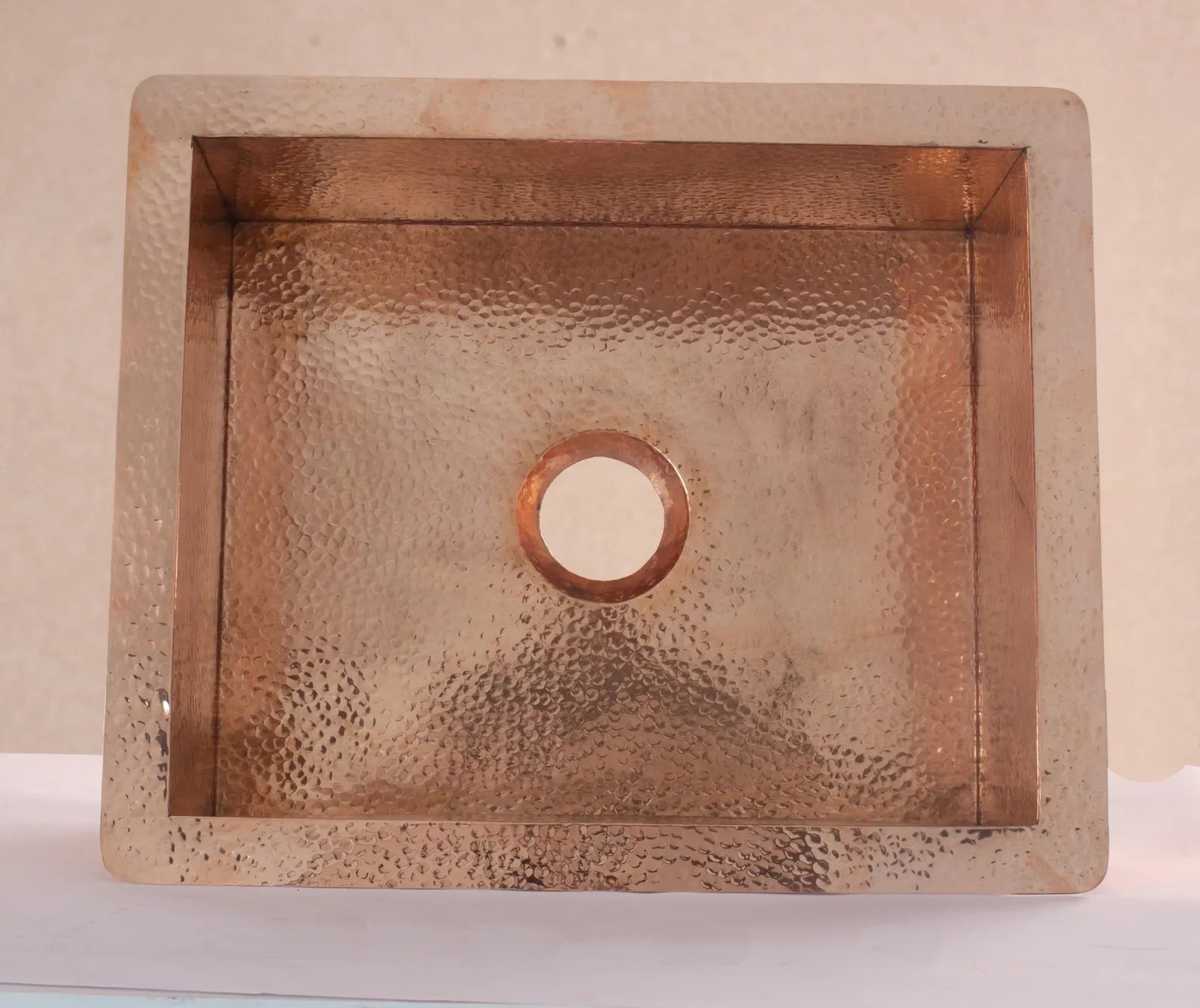
The same hammered undermount design in copper, for a warmer tone that darkens faster than brass.

16-gauge brass in 12, 14, 16, 18, or 20 in diameters, customizable to your countertop cutout. Suits islands and bar areas.
View product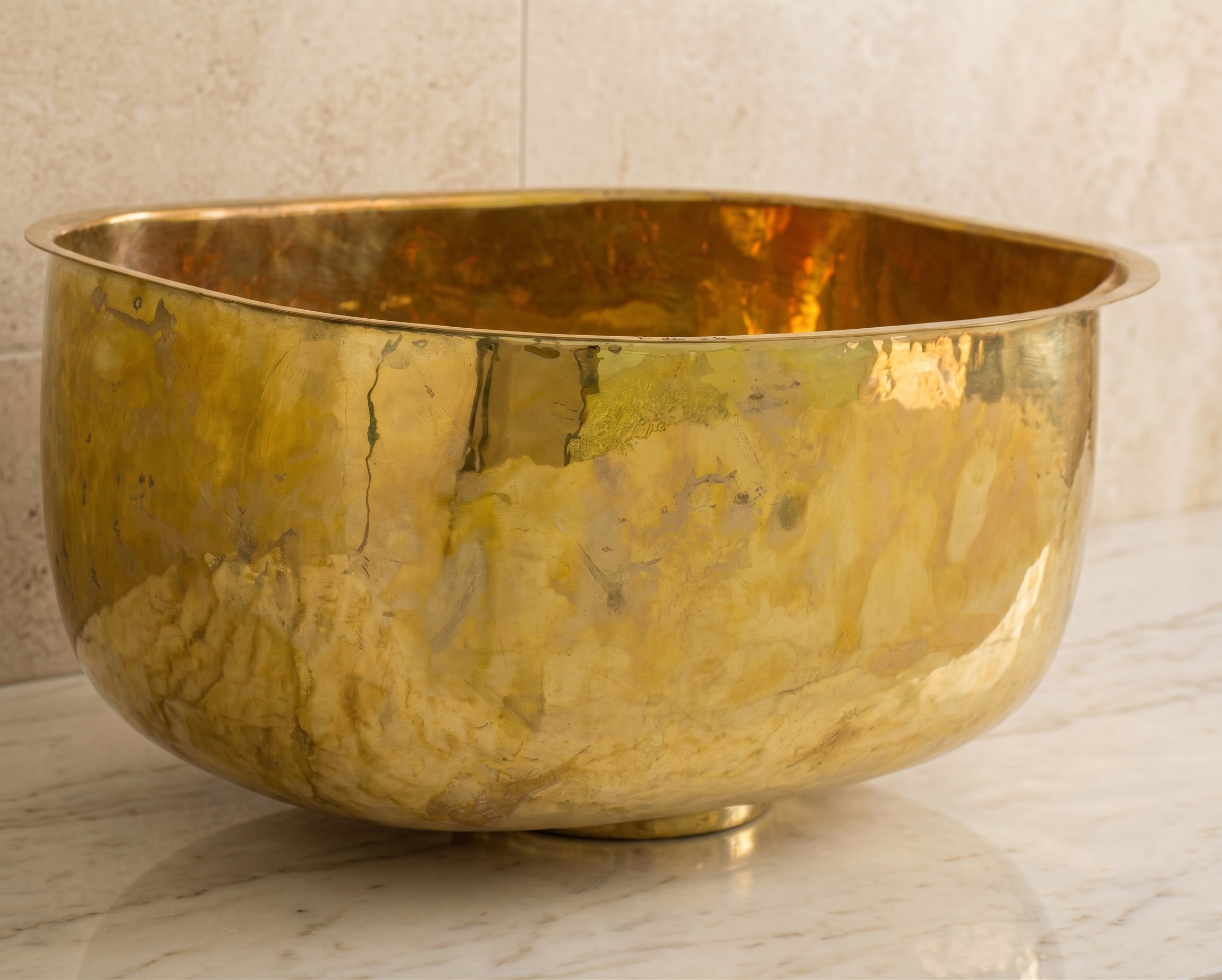
16-gauge brass, 16.8 in long, 13 in wide, 7.7 in deep with a 3.5 in drain. A smooth rectangular basin for prep work.
View product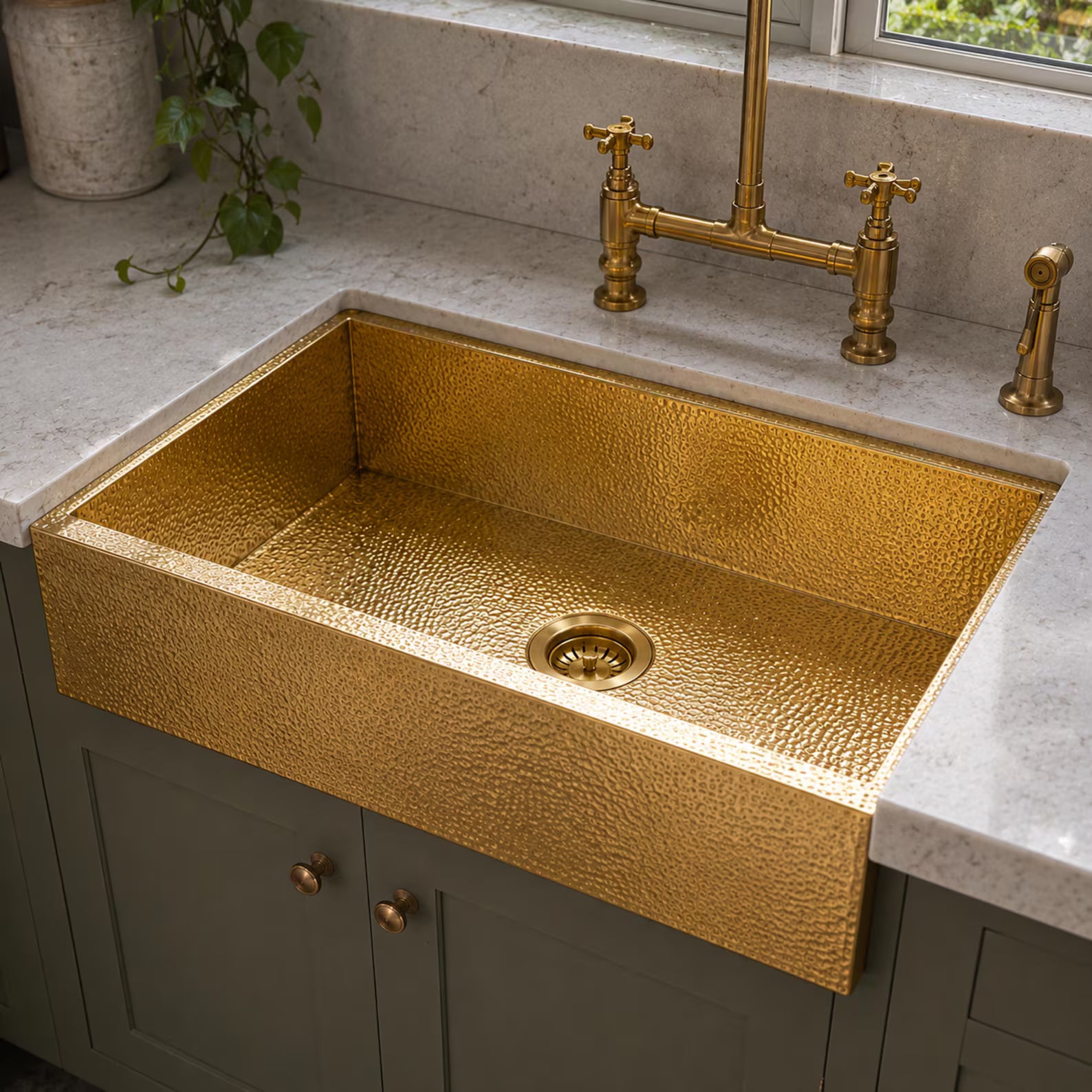
39 x 23 in overall, 36 x 20 in cutout, 10 in bowl depth, 7 in apron. One of our largest sinks, for a main kitchen basin.
View product
36.5 x 24 in overall, 33.5 x 21 in inner basin, two 3.5 in drains. Suits dual faucet or disposal layouts.
View product"Beautiful sink! Well made and nice craftsmanship. Will upload picture once installed!"
An honest note on scale: our standard undermount sizes run compact, so for a full main basin most buyers either order a custom size or choose one of the farmhouse sinks. Farmhouse sinks also need a cabinet built or modified for an apron front, so confirm that with your cabinet maker first. Drain sizes vary by model, from 1.63 inches on the round bar sink to 3.5 inches on the prep and farmhouse sinks, so check yours against your plumbing and disposal. The farmhouse page notes an adapter may be required for some disposals.
Checklist before you order
- Measured the inside width of the base cabinet, and the sink is at least 3 in narrower
- Checked countertop depth, faucet space, and the 24 in / 18 in landing areas
- Picked a bowl depth that suits the main cook's height
- Confirmed the cutout dimensions and mounting style (undermount, drop-in, apron)
- Asked for gauge and weight, and checked the cabinet can carry it
- Matched faucet reach, height, and finish to the basin
- Checked the drain size against your disposal and plumbing
Frequently Asked Questions
How do I choose the right size kitchen sink?
What is the best material for a kitchen sink?
Is a stainless steel kitchen sink a good choice?
How deep should a kitchen sink be?
Is a single bowl or double bowl kitchen sink better?
Every Insideast sink is handmade in Marrakech from solid brass or copper and made to order, with custom sizes available for non-standard cutouts. Browse the brass kitchen sinks collection or the undermount and drop-in sinks, or message us with your cabinet measurements and we will help you find the right fit.


