


Fregaderos de latón y cobre macizo, hechos a mano en Marrakech. Explora la colección de fregaderos empotrados y de encimera.
La respuesta honesta es que ningún tipo de instalación es objetivamente mejor. El fregadero bajo encimera ofrece una línea de encimera más limpia y facilita la limpieza. El fregadero de encimera es más sencillo de instalar, más fácil de reemplazar más adelante y funciona con casi cualquier material de encimera. La elección correcta depende de tu encimera, tu presupuesto y cuánto te moleste ver un borde. Aquí está la verdadera diferencia, cubierta honestamente.
- El fregadero bajo encimera esconde el borde del fregadero debajo del borde de la encimera para una apariencia impecable. El fregadero de encimera muestra un borde visible que se asienta sobre la encimera.
- El fregadero bajo encimera requiere una abertura de encimera cortada con precisión e instalación profesional. El fregadero de encimera utiliza un orificio precortado estándar y es mucho más sencillo.
- El fregadero bajo encimera gana claramente en limpieza: no hay borde que atrape migas o agua. El fregadero de encimera es más fácil y barato de reemplazar si alguna vez cambias de fregadero.
- La pátina se desarrolla idénticamente de cualquier manera. El estilo de instalación cambia el aspecto del borde, no cómo envejece el latón.
- Las encimeras de piedra maciza y superficie sólida son las que mejor se adaptan al fregadero bajo encimera. El laminado generalmente no se recomienda para fregaderos bajo encimera debido al borde cortado expuesto.
- Qué significa realmente "bajo encimera" y por qué tiene ese aspecto
- Qué significa "de encimera": la instalación tradicional
- Complejidad de la instalación: lo que realmente necesitan tu fontanero y tu fabricante
- Cuál queda mejor en encimeras de piedra, madera y laminado
- Diferencias de limpieza: los fregaderos bajo encimera ganan en higiene
- Qué fregaderos Insideast están disponibles en cada estilo
- Preguntas frecuentes
Qué significa realmente "bajo encimera" y por qué tiene ese aspecto
Un fregadero bajo encimera se fija a la parte inferior de la encimera, con el borde quedando debajo de la piedra o material de superficie en lugar de encima. Desde arriba, se ve el borde de la encimera que se extiende directamente hacia la cubeta, sin ningún labio visible entre ambos. El fregadero se sujeta en su lugar con clips de montaje o epoxi fijados a la parte inferior de la encimera, y el borde cortado suele estar pulido o acabado, ya que permanece visible alrededor del perímetro.
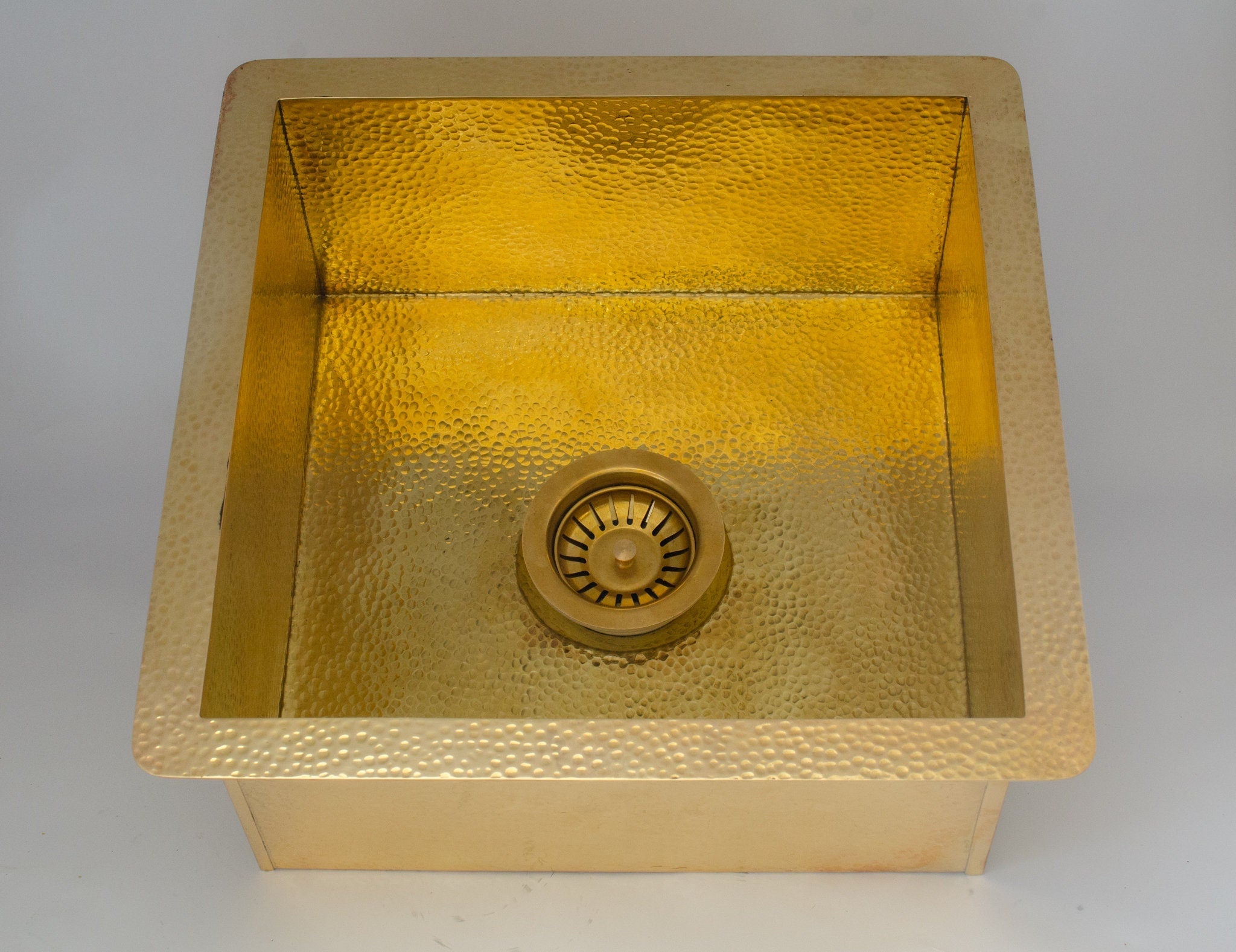
Fregadero de latón martillado bajo encimera. Ver este fregadero
La ventaja visual de los fregaderos bajo encimera
Una superficie continua, sin interrupciones
Debido a que no hay un borde que se asiente sobre la encimera, el fregadero bajo encimera se percibe como una superficie única e ininterrumpida desde la encimera hasta la cubeta. Este es el aspecto al que la mayoría de los compradores se refieren cuando desean que su fregadero se sienta "integrado" en lugar de "añadido".
En un fregadero bajo encimera de latón macizo, la textura martillada o lisa continúa hasta el borde del recorte, por lo que la transición de la piedra o madera al metal es la única junta visible en toda la encimera.
El fregadero bajo encimera es el estilo de instalación más reciente en cocinas residenciales, ganando popularidad junto con el auge de las encimeras de piedra maciza y superficie sólida en las últimas dos décadas. No es una ingeniería superior a la del fregadero de encimera. Es una relación diferente entre el fregadero y la encimera, que depende de que la encimera sea lo suficientemente rígida y gruesa como para soportar un recorte sin un borde visible.
Qué significa "de encimera": la instalación tradicional
Un fregadero de encimera, también llamado fregadero de montaje superior o autosellante, tiene un borde incorporado en el propio fregadero que descansa directamente sobre la superficie de la encimera alrededor de un orificio precortado. El peso del fregadero, más un cordón de sellador y a veces clips debajo, lo mantiene en su lugar. Este es el método de instalación más antiguo y aún más común en todo el mundo, y funciona con prácticamente cualquier material de encimera porque el recorte no necesita ser portante o tener un acabado de precisión en el borde; el borde lo cubre.
La ventaja de los fregaderos de encimera
Más sencillo, más indulgente y más fácil de cambiar
Debido a que el borde se asienta en la parte superior y cubre el recorte, el fregadero de encimera tolera un orificio no tan perfecto y funciona por igual en laminado, azulejo, tabla de carnicero y piedra. Si alguna vez deseas reemplazar el fregadero, uno de encimera se quita y uno nuevo se coloca sin necesidad de volver a cortar la encimera, siempre que el nuevo fregadero tenga aproximadamente la misma huella.
La contrapartida es el propio labio visible: una junta elevada alrededor del fregadero donde las migas, el agua y la suciedad pueden acumularse con el tiempo.

Un fregadero de cobre de encimera con grifo de latón a juego. El borde visible es la característica distintiva de este estilo de instalación.
Referencia externa
Los fregaderos empotrados preceden a los de bajo encimera por décadas; el estilo bajo encimera solo se hizo común una vez que las encimeras de piedra sintética y diseñada estuvieron ampliamente disponibles, ya que esos son los materiales que se pueden cortar y acabar con suficiente limpieza para ocultar el borde.
Complejidad de la instalación: lo que realmente necesitan tu fontanero y tu fabricante
Aquí es donde los dos métodos difieren más en la práctica, y de donde proviene la mayor parte de la diferencia de costo.
El fregadero bajo encimera requiere
- Un fabricante de encimeras para cortar una abertura precisa antes de instalar la encimera
- La plantilla exacta del fregadero, el perfil del borde y el peso con antelación
- Clips de montaje o epoxi fijados a la parte inferior de la encimera
- Un borde cortado pulido o acabado, ya que permanece visible
- Coordinación entre el fabricante y el fontanero, generalmente dos visitas separadas
El fregadero de encimera requiere
- Un orificio precortado estándar que coincida con las dimensiones exteriores del fregadero
- Un cordón de masilla de fontanero o sellador de silicona debajo del borde
- Clips de montaje básicos desde abajo en la mayoría de los casos
- Un fontanero, una visita, normalmente menos de una hora
- Sin coordinación con un fabricante de encimeras independiente
Debido a que los fregaderos de latón macizo son más pesados que los de acero inoxidable o los de arcilla refractaria del mismo tamaño, el peso es más importante aquí que con la mayoría de los materiales. Un fabricante que corte una abertura bajo encimera necesita conocer el peso real y el perfil del borde del fregadero antes de cortar, no solo su huella, ya que el hardware de montaje debe soportar esa masa durante años de uso diario. Esta es una de las razones por las que Insideast proporciona especificaciones exactas de peso y dimensiones en cada página de producto de fregadero, y puede asesorar directamente sobre recortes no estándar cuando sea necesario.
Todos los fregaderos Insideast de empotrar y de encimera también se pueden personalizar bajo pedido, en tamaño, profundidad de la cubeta o acabado, contactando con el servicio de atención al cliente antes de realizar el pedido. Si la abertura de tu encimera no coincide con el tamaño estándar de un fregadero, exactamente el tipo de situación que surge a menudo con las adaptaciones de fregaderos de empotrar, un fregadero hecho a medida evita forzar el recorte para que se ajuste a un tamaño de stock.
"¡Gran servicio! Obtuve un fregadero a medida y el aspecto es impresionante. También proporcionaron un fregadero adicional a la fábrica ya que el primero era ligeramente diferente de la imagen. Lo recomiendo encarecidamente."
Cuál queda mejor en encimeras de piedra, madera y laminado
El material de encimera que ya tienes, o que planeas instalar, limita esta decisión más que el gusto personal.
| Encimera | Bajo encimera | De encimera |
|---|---|---|
| Piedra maciza (granito, cuarcita, mármol) | Ideal. Se puede cortar y pulir con precisión; el emparejamiento estándar. | Funciona, pero el borde visible es menos común con la piedra en cocinas modernas. |
| Madera maciza / tabla de carnicero | Funciona si el borde cortado se sella y vuelve a sellar periódicamente contra la humedad. | Funciona fácilmente y es la opción más indulgente para los instaladores de bricolaje. |
| Laminado | No suele recomendarse. El borde de aglomerado expuesto en el corte puede hincharse si el agua lo alcanza. | El emparejamiento estándar. El borde cubre y protege completamente el borde cortado. |
| Superficie sólida (cuarzo, etc.) | Excelente. Se comporta de manera similar a la piedra y es uno de los emparejamientos bajo encimera más comunes. | Funciona, aunque es menos común dado lo bien que este material se adapta a los fregaderos bajo encimera. |
En la práctica, esto significa que la decisión a menudo ya está tomada por la encimera. Si tienes laminado, el fregadero de encimera es la respuesta práctica, independientemente de tus preferencias. Si tienes piedra maciza o superficie sólida, el fregadero bajo encimera está disponible para ti, y en ese punto la decisión se reduce a si quieres o no el borde visible.
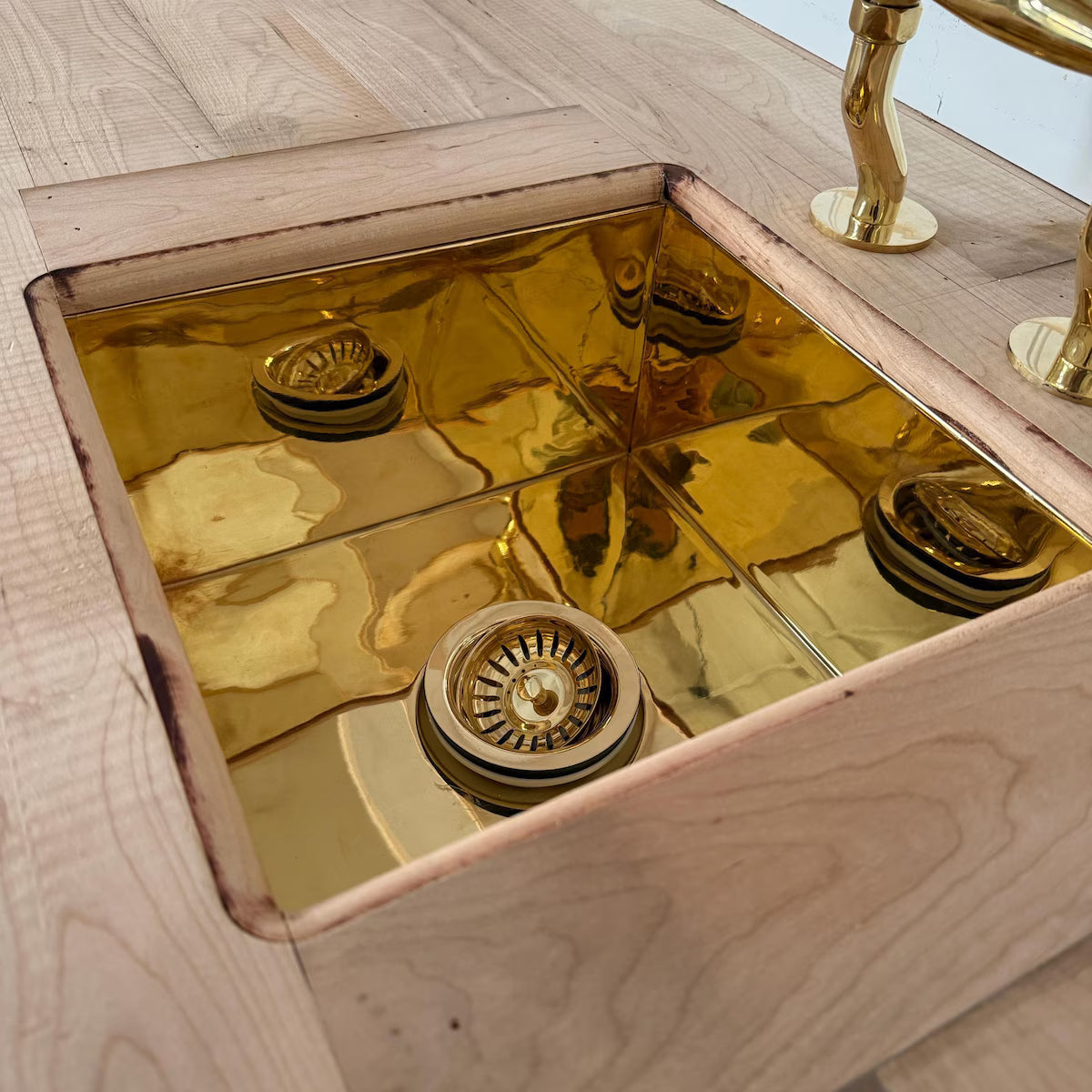
Fregadero de latón bajo encimera debajo de una encimera de madera.
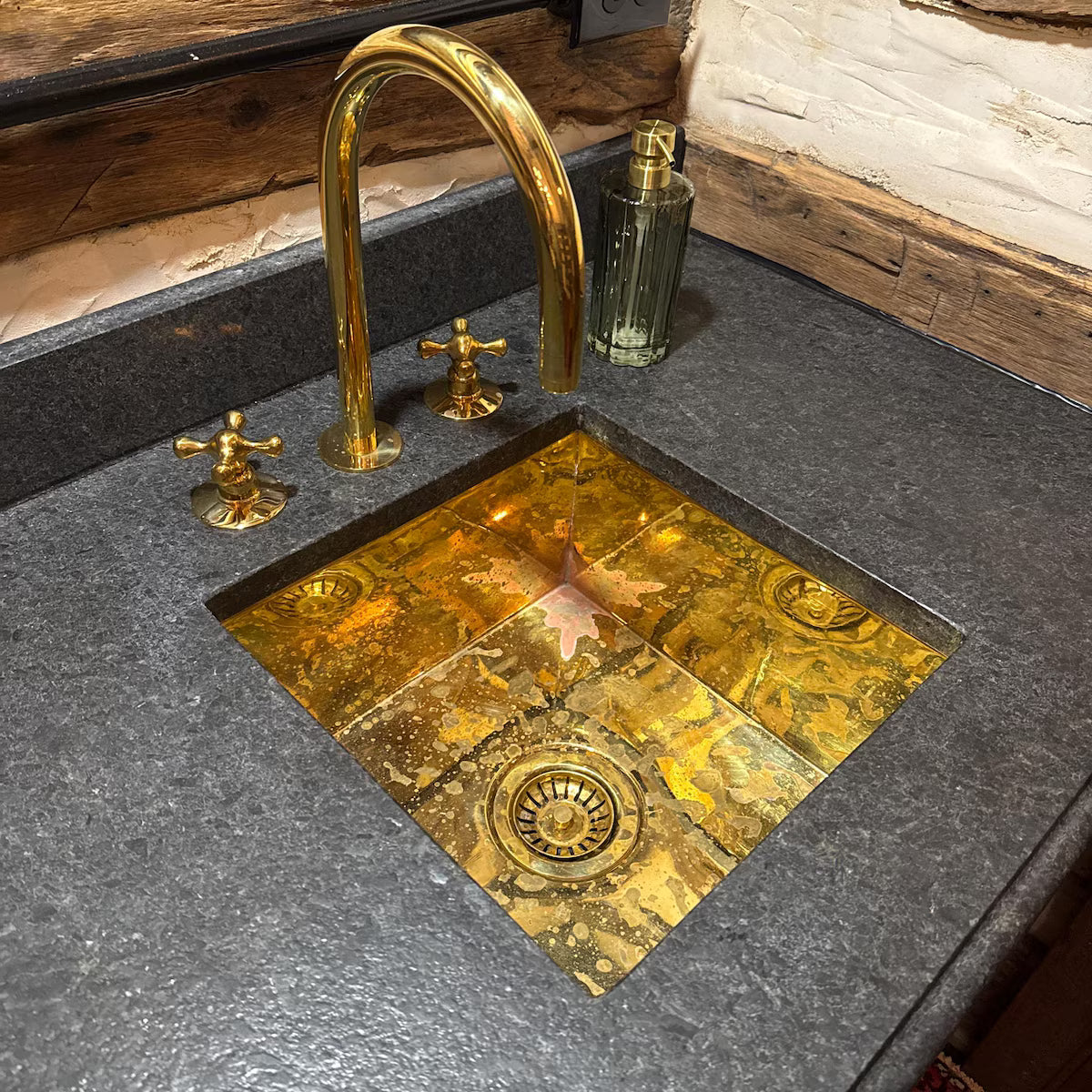
El mismo estilo de fregadero bajo encimera debajo de mármol. Ver este fregadero
Ambas combinaciones funcionan. La encimera de madera se ve más cálida y rústica junto al latón, mientras que el mármol crea más contraste entre la piedra fría y el metal cálido. Ninguno de los materiales va en contra del proceso de pátina; un fregadero de latón sin lacar desarrolla el mismo acabado de ámbar a bronce con el tiempo, independientemente de en qué se instale, un proceso que se detalla en nuestra guía sobre cómo envejece el latón sin lacar.
Diferencias de limpieza: los fregaderos bajo encimera ganan en higiene
Esta es la única categoría donde la diferencia no es sutil. El borde de un fregadero de encimera crea una unión donde la encimera se encuentra con el labio de metal, un punto natural de acumulación de migas, agua estancada y suciedad que debe limpiarse o frotarse por separado del resto de la encimera. Con los años, esa unión también es donde el sellador puede degradarse primero, necesitando ocasionalmente un nuevo sellado.
Un fregadero bajo encimera no tiene una unión equivalente en el lado de la encimera. Se pueden limpiar los residuos de la encimera directamente en la cubeta con un solo movimiento, ya que no hay ningún labio que los detenga primero. Para un fregadero de cocina utilizado varias veces al día, esto es una comodidad diaria significativa, no solo una preferencia estética.
"El fregadero es precioso. Es un fregadero poco profundo, pero funciona de maravilla."

Esa ventaja de limpieza se aplica igualmente al latón y a cualquier otro material bajo encimera. No es específica del latón y no compensa ni reemplaza la limpieza regular que el latón sin lacar necesita para controlar la velocidad de la pátina, detallada completamente en nuestra guía sobre Cómo limpiar latón: ¡Probamos 5 métodos efectivos y fáciles para ti!.
Qué fregaderos Insideast están disponibles en cada estilo
Insideast fabrica ambos tipos de instalación en latón macizo sin lacar, por lo que la elección entre empotrar y de encimera no significa elegir un material o calidad de acabado diferente, solo un método de montaje diferente.

Fregadero de cocina, barra, isla o exterior. La textura martillada continúa hasta el borde de corte para un acabado bajo encimera sin costuras.
Ver producto
Un fregadero de un solo seno y acabado liso, dimensionado para cocinas compactas donde una textura martillada no es el estilo deseado.
Ver productoPara el lado de empotrar, el fregadero ovalado de latón martillado es el estilo empotrado más consolidado de Insideast, con la misma construcción sólida y textura martillada, engastado en un perfil ovalado auto-rebordeado que se adapta a instalaciones de tocador y baño. El fregadero ovalado de latón con diseño de pétalos es una opción decorativa más pequeña de la misma familia, personalizable bajo petición. Explore la colección completa de fregaderos bajo encimera y de empotrar para comparar tamaños y acabados actuales.
"Nuestro primer paquete se perdió en el tránsito, pero Abdel se puso en contacto de inmediato y nos ayudó a conseguir otro fregadero sin costo adicional. El fregadero es pequeño pero impresionante, una pieza con carácter que destacará en nuestra casa."

Cualquier estilo de instalación que elija, cada fregadero de Insideast bajo encimera o de empotrar se puede especificar para ambas configuraciones bajo petición, y personalizar en tamaño o acabado poniéndose en contacto con el servicio de atención al cliente antes de realizar el pedido. Dos notas más de compradores que pasaron por ese proceso dan una idea de cómo es realmente trabajar con el taller:
Heidi · Compradora verificada
- "Maravilloso trabajar con ellos, cumplieron el plazo de mi cliente y fueron increíblemente serviciales."
Christoph · Comprador verificado
- "El vendedor incluso estuvo dispuesto a verificar las dimensiones de mi lavabo en la foto con una cinta métrica para asegurarse de que todo encajara. El lavabo fue fabricado exactamente según las dimensiones solicitadas."
Este artículo forma parte de la serie de fregaderos Insideast. La Guía de fregaderos de cocina de latón del Reino Unido cubre consideraciones de tamaño y compra específicas del Reino Unido, y Fregadero de latón vs. acero inoxidable cubre la durabilidad y la estética a largo plazo con mayor profundidad.
Preguntas frecuentes
Preguntas comunes sobre los fregaderos de latón bajo encimera vs. los de empotrar
¿Es difícil instalar un fregadero de latón bajo encimera?
No es difícil, pero es más complejo que un fregadero de empotrar. La instalación bajo encimera requiere una abertura de encimera cortada con precisión, clips de soporte o epoxi fijados a la parte inferior de la encimera, y casi siempre es un trabajo de dos personas entre un fabricante de encimeras y un fontanero. Un fregadero de empotrar simplemente se apoya en un orificio precortado y se atornilla desde arriba, lo que la mayoría de los fontaneros completan solos en menos de una hora.
¿Qué encimera funciona mejor con un fregadero de latón bajo encimera?
La piedra sólida (granito, cuarcita, mármol) y los materiales de superficie sólida son la elección estándar, porque se pueden cortar con precisión y sellar en el borde contra la humedad. Las encimeras laminadas generalmente no se recomiendan para la instalación bajo encimera, ya que el borde de aglomerado expuesto en el recorte puede hincharse si el agua penetra detrás de él. El bloque de carnicero y la madera maciza pueden funcionar para la instalación bajo encimera si el borde está sellado correctamente y se vuelve a sellar periódicamente.
¿Se puede instalar un fregadero de latón bajo encimera?
Sí. El latón macizo tiene la masa y la rigidez estructural para ser instalado bajo encimera de forma segura, de la misma manera que los fregaderos de piedra maciza o hierro fundido. Lo que importa es que el fabricante de la encimera conozca el perfil exacto del borde y el peso del fregadero antes de cortar, ya que los fregaderos de latón varían en el diseño del labio y suelen ser más pesados que los fregaderos de acero inoxidable bajo encimera del mismo tamaño.
¿La instalación bajo encimera o de empotrar afecta la pátina del latón?
No. El proceso de pátina es idéntico en ambos casos. El latón sin lacar se oscurece de dorado brillante a tonos ámbar, marrón y bronce según la exposición al aire, la química del agua y la manipulación, no según cómo se monte el fregadero. La única diferencia visual que crea el estilo de instalación es el borde visible: un fregadero de empotrar muestra un labio elevado alrededor del fregadero, mientras que un fregadero bajo encimera oculta el borde debajo del borde de la encimera.
¿Es más caro el fregadero bajo encimera que el de empotrar?
El fregadero en sí no es necesariamente más caro, pero la instalación suele costar más, ya que el bajo encimera requiere una abertura de encimera cortada a medida, accesorios de montaje y mano de obra más cualificada. Un fregadero de empotrar utiliza un orificio estándar precortado y herrajes más sencillos, lo que reduce el coste y el tiempo de instalación.
Todos los fregaderos de esta guía están hechos a mano en el taller de Insideast en Marrakech, en latón macizo sin lacar. Explore la colección de fregaderos de latón bajo encimera y de empotrar, o póngase en contacto a través de la página de personalización si la abertura de su encimera necesita un tamaño no estándar.


