


Handmade in Marrakech. Wall-mounted, articulating, cold water only. The kitchen fixture that develops the most visible patina of all.
A pot filler tap sits closer to heat, steam, and cooking activity than any other fixture in your home. That environment does something specific to unlacquered brass: it accelerates the patina faster than a bathroom faucet, faster than a kitchen sink tap, faster than almost anything else in the house. For homeowners and designers who choose unlacquered brass because they want a fixture that actually ages and develops character, a pot filler near the hob is where that process is most visible.
This guide covers what a pot filler is, why the wall-mount height measurement matters more than most installers acknowledge, whether you need a plumber, and what the finish looks like after months of cooking steam. If you are weighing whether an unlacquered brass pot filler is worth adding to your kitchen, this is the honest picture. If you are also considering a matching unlacquered brass kitchen faucet, that guide covers the full sink faucet decision separately.
- A pot filler is wall-mounted above the hob and supplies cold water only. It requires a dedicated cold-water stub-out behind the wall.
- The correct mounting height is 48 to 56 cm above the hob surface, though this varies by arm reach and cooktop depth. Getting this wrong means the arm either cannot clear pots or hangs too high to be useful.
- Most homeowners hire a plumber for the rough-in (the wall supply line). Connecting the pot filler to the stub-out once it is in place is straightforward.
- Steam and heat near the hob mean unlacquered brass patina develops noticeably faster here than on a bathroom faucet. The finish deepens within weeks of regular use.
- Cold water only means no thermal stress on the brass body. The articulating joints take the wear, not the fixture itself.
- What a pot filler tap is (and why kitchens want them)
- Unlacquered brass in a working kitchen
- Wall-mount height: the measurement most guides get wrong
- Do you need a plumber, and what does installation involve?
- How the finish ages near heat and steam
- Insideast pot filler options
- Frequently asked questions
What a pot filler tap is (and why kitchens want them)
A pot filler is a wall-mounted faucet installed above a cooktop or range. The arm swings out over the hob when you need it, letting you fill a large stockpot directly on the burner rather than carrying it full of water from the sink. That is the practical argument. The design argument is separate and equally strong: a wall-mounted brass arm above a range is one of the most-photographed details in a renovated kitchen.
A few technical points worth knowing before you plan your installation. First, pot fillers supply cold water only. There is no hot supply connection. This is by design: the fixture sits above a heat source, and a hot-water connection would require insulated supply lines running further from the wall. Cold-only keeps the installation simpler and the wall penetration smaller. Second, pot fillers require a dedicated cold-water stub-out behind the wall at the correct height, which is a rough plumbing task typically done when the kitchen is open during renovation. Adding one to a finished kitchen is possible but involves opening the wall. Third, most pot fillers have two shut-off valves: one at the wall and one at the spout end. The double-valve design is a deliberate safety feature for a fixture mounted near an active cooking area.

Installed above the range. The arm extends over the burner, fills the pot, folds flat when not in use. Jenna Sue Design kitchen.
How the fixture actually works
Fold out, fill, fold back
Pot fillers come in two configurations. The most common is the folding articulating arm: two or three hinged joints that fold flat against the wall when not in use and extend 40 to 50 cm over the hob when needed. The second type is the single-arm swivel design: a fixed-length arm that pivots from a single wall mount point with a longer reach and a simpler mechanism, suited to wider ranges (90 cm and above) where a fixed reach covers the whole cooking area. The flow rate on a residential pot filler is typically 8 to 12 litres per minute, which means a 6-litre stockpot fills in under a minute.
Are pot filler taps worth it? The honest answer is: yes, for homeowners and designers who cook regularly with large pots and who are doing a kitchen renovation that already involves opening the wall. Adding one to a fully finished kitchen purely for aesthetics requires opening the wall behind the range, which changes the cost calculation. If the wall is already open during a renovation, the cost of adding the stub-out is modest compared to the long-term daily convenience.
Unlacquered brass in a working kitchen
Unlacquered brass in a kitchen environment behaves differently from the same finish in a bathroom. The kitchen involves more variable conditions: cooking oils in the air, occasional splashes of acidic liquids, temperature fluctuations from the hob, and above all, steam. A pot filler is exposed to more of these conditions than any other kitchen fixture because of where it sits: directly above an active cooking surface.
That exposure is exactly what makes the patina story compelling. An unlacquered brass pot filler that gets used several times a week will show visible character within the first few weeks of use. The areas closest to the steam source deepen first. The joints, which get handled directly, develop their own patina from contact with skin oils. Within a few months of regular use, the fixture has a warmth and depth that no factory finish can replicate, because it got there through actual cooking.
The kitchen finish story
Steam does what years of bathroom use cannot
In a bathroom, an unlacquered brass faucet typically takes 6 to 18 months to develop noticeable patina. A pot filler above an active hob can show the same depth of character in 4 to 8 weeks. The steam from boiling water, the heat from the burners, and the handling of the valves all contribute. If you want to understand exactly how the unlacquered finish ages over time compared to lacquered alternatives, that guide covers the full picture. A kitchen pot filler simply shows you that timeline at its fastest.
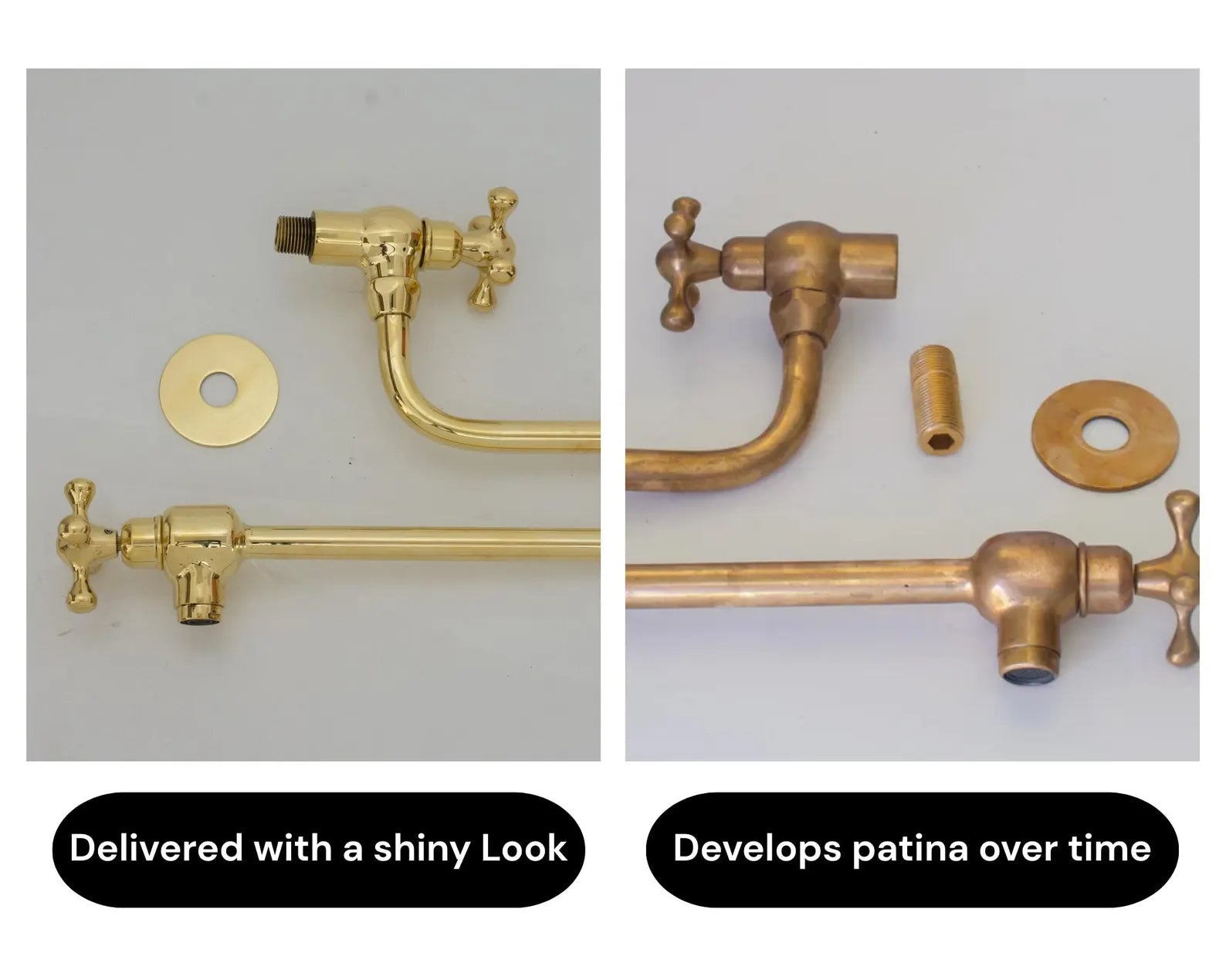
Two stages of the same finish: bright at delivery, then the warm depth that develops through regular kitchen use and steam.
One practical note specific to the kitchen: cooking oils and grease can build up on any surface near the hob, including the pot filler arm. A wipe down with a slightly damp cloth once a week keeps the fixture clean without interfering with the natural patina process. Avoid abrasive cleaners or anything acidic. The patina itself is protective: once it has formed, it is more resistant to the kitchen environment than the fresh brass surface was at installation.

feelslikehome_co on Instagram. Photo credit: @feelslikehome_co
From the community
"I love the way it ages so beautifully, getting warmer and more lived in day by day"
"One of the first things I knew I wanted for our renovation was living/raw/unlacquered brass. I had a little taste of it in my bathroom growing up and love the way it ages so beautifully, getting warmer and more lived in day by day. I scoured the internet and was so excited to come across Insideast. Handmade in Morocco, their products are beautiful, customer service has been amazing and I can't wait to see these pieces in our home. I can't recommend them enough so far."
@feelslikehome_co on Instagram
"Absolutely gorgeous! I can't wait to add this to my kitchen."

Wall-mount height: the measurement most guides get wrong
The single most common pot filler installation mistake is mounting the fixture at the wrong height. Most online guides give a number between 45 and 60 cm above the hob and leave it there. That range is a starting point, not a specification. The correct height for your installation depends on three variables that interact with each other: the arm reach of your specific pot filler, the depth of your cooktop, and the tallest pot you plan to fill regularly.
Here is the actual calculation. The arm needs to swing out far enough to clear the front burners, and when extended, the spout needs to be high enough to clear your tallest stockpot sitting on the hob. Most standard stockpots are 28 to 35 cm tall. Add 5 to 8 cm clearance above the pot rim for comfortable filling without splashing, and you have the minimum spout height in use. Subtract the arm reach angle drop to get back to the wall mounting point.
Height Reference: Common Installation Positions
The wall position matters as much as the height
Pot fillers are typically installed directly behind the cooktop, centred on the range width. If your range is 60 cm wide, the fixture should sit 30 cm from either side at the wall. If you have a 90 cm professional range, centre it on the most-used cooking zone. The arm should be able to reach both centre positions from the folded-back wall position.
How to test the height before your plumber commits
Before the rough-in is done, tape a piece of cardboard to the wall at your proposed height and swing a measuring tape out at arm-reach distance. Put your tallest pot on the hob and check whether the simulated spout position clears it with 5 cm to spare. This takes 10 minutes and avoids a situation where the fixture is 4 cm too low. Once the supply line is in the wall, adjusting height requires reopening the wall.
"Having unlacquered brass in our kitchen has been a DREAM of mine. It is a bit of an investment BUT it is a good investment if you have saved and KNOW it is exactly what you want."

Do you need a plumber, and what does installation involve?
The rough-in work, meaning running a cold-water branch from your existing supply and terminating it with a stub-out at the correct wall position and height, requires basic plumbing competence and, in most local jurisdictions, a licensed plumber for any work that touches the supply system. The connection work, meaning mounting the pot filler body to the wall stub-out once it is in place, is straightforward enough for a confident DIY installer.
In practical terms: if your kitchen wall is already open during a renovation, this is the right moment to add the stub-out. The incremental cost is low compared to opening a finished wall later. If you are adding a pot filler to a completed kitchen, factor in the cost of opening, patching, and repainting the section of wall behind the range.
Installation Checklist: Before Your Plumber Arrives
- Decide on wall position (centred on range width, directly behind cooktop)
- Agree on mounting height using the pot test described above
- Confirm the plumber will install a standard cold-water stub-out with an isolation valve
- Check whether the wall is tiled: ceramic tile needs a diamond drill bit and careful marking before the pot filler body is mounted
- Confirm thread standard: NPT for US and Canada; BSP for UK and Europe. Insideast supplies the correct fittings for your region with every order
- Have the pot filler on-site before rough-in so the plumber can confirm the correct stub-out diameter
- Ask the plumber to pressure test the supply line before closing the wall
Thread standards and regional fittings
UK and European plumbing uses BSP (British Standard Pipe) connections. The US and Canada use NPT (National Pipe Taper). These thread standards are not directly compatible. When you order from Insideast, the correct regional fittings are included automatically based on your shipping address. You do not need to specify thread type or source adapters separately. If you are importing to a non-standard region, contact the team at contact@insideast.com before ordering. For a deeper look at all the technical details around fittings, hole configurations, and supply connections, the complete unlacquered brass faucets buyer's guide covers everything in one place.
What happens if there is a drip at the wall connection?
A minor drip at the wall connection point is almost always a thread-sealing issue rather than a fixture defect. PTFE tape applied correctly to the male thread before connection resolves this in the large majority of cases. Apply 3 to 5 wraps in the direction of the thread and tighten firmly. If the drip persists, check that the stub-out isolation valve is fully seated and that the thread connection is not cross-threaded. Both are installation variables, not fixture variables.

A real installation. The arm folds flat when not in use and swings out to any angle on the articulating joint. Photo: Insideast homeowner.
How the finish ages near heat and steam
Unlacquered brass ages through oxidation: the surface reacts with oxygen, moisture, and contact to develop a layer of compounds that change its colour and texture. The result in low-humidity, low-heat environments like a guest bathroom is slow and subtle. The result near an active kitchen hob is faster and more pronounced, and that is worth understanding before you buy.
The compounds involved in normal kitchen patina are the same ones that form on any exposed brass surface: copper oxide produces the warm reddish-brown tones, and zinc oxide contributes to the deeper amber-gold. These are stable compounds. They are what give aged brass its character and depth, and what protect the surface from further oxidation. A pot filler that has developed a full patina is in a stable equilibrium with its environment.
What to expect in the first year
During the first few weeks of regular use, the pot filler will begin to lose its uniform bright finish. The joints and valve handles change first, because they are handled directly. The area closest to the steam rising from boiling water deepens next. Within 2 to 3 months of regular cooking use, the fixture will have developed a warm, uneven amber-gold character that looks genuinely aged rather than factory-finished. By 6 months, the whole fixture will have a settled, warm depth that most homeowners describe as far more satisfying than the appearance at installation.
Green patina: when it happens and when it does not
In a normally ventilated kitchen, green patina (verdigris) is not a realistic concern on a pot filler. Verdigris requires sustained contact with moisture combined with acidic or saline conditions over an extended period. Cooking steam is transient, not sustained. The surface dries between uses. For a more detailed explanation of exactly when green patina occurs and how to address it if it does, see Will Unlacquered Brass Turn Green?
Caring for the finish near the hob
Normal maintenance is minimal. Wipe the arm and valves with a damp cloth every week or two to remove cooking grease before it builds up. Dry after wiping. Do not use kitchen degreasers, vinegar-based sprays, or abrasive pads: these will strip the patina unevenly. If you want to slow the patina development, a thin application of Renaissance wax every few months provides a light barrier without sealing the brass. If the finish gets uneven in a way you find unattractive, a paste of plain flour, salt, and white vinegar restores the bright surface. For a full breakdown of tested methods and what to avoid, see our guide to cleaning brass: 5 methods we tested. From there, the patina clock resets and the process begins again.

Cove House: Insideast fixtures throughout, including the pot filler above the range.
Project in focus
When the whole kitchen comes from the same workshop
Interior design studio Cove House put it simply: "We have a love affair with this Insideast unlacquered brass bridge faucet. This is a living finish that develops patina over time and feels like a timeless addition to the kitchen." Their kitchen included both the bridge faucet and the pot filler from the same Marrakech workshop, so every fixture ages into the same character. Read the full Cove House project story.
Insideast pot filler options
Every Insideast pot filler is handmade in Marrakech from solid brass, not brass-plated zinc. The distinction is visible in the weight: a solid brass arm has a density that plated zinc cannot match. It is also what makes the patina story coherent: a zinc body with a brass layer will not age the way solid brass does, because as the plating wears through, the substrate behaves differently from the brass surface.
The collection covers articulating wall-mount designs in both unlacquered brass and antique brass finishes. Unlacquered brass starts bright and ages through use. Antique brass is pre-aged to a deeper, darker starting point and ages more slowly from there. Both are solid brass. Both can be paired with bridge faucets, single-hole kitchen faucets, or wall-mount kitchen taps from the same workshop to ensure the pieces age into a consistent character over time, something you cannot guarantee when mixing brands.
Factory-direct pricing means the workshop margin rather than the retailer margin. A comparable solid brass pot filler from a UK plumbing brand typically starts at £280 to £380. Insideast delivers a handmade equivalent at a lower price because there is no distribution chain between the workshop and your door.
If you are planning a kitchen renovation and want to see the full range, browse the Insideast brass pot filler collection or pair it with a matching unlacquered brass kitchen faucet from the same workshop.
Frequently Asked Questions
Common Questions About Brass Pot Filler Taps
Are pot filler taps worth it?
How high should a pot filler be installed?
Do pot fillers need a plumber?
Does an unlacquered brass pot filler need special maintenance near the hob?
Can a pot filler be installed on a tiled wall?
What is the difference between an unlacquered brass and an antique brass pot filler?
The bottom line on brass pot filler taps
An unlacquered brass pot filler tap is the kitchen fixture that shows you most clearly what a living finish actually means. No other fixture in the house sits closer to the conditions that accelerate patina: heat, steam, handling, and the general activity of a working kitchen. For homeowners and designers who are drawn to unlacquered brass because they want something that genuinely ages with the home, a pot filler above the range is the most compelling version of that story.
The practical considerations are real but manageable. Height and wall position need to be planned before the rough-in. A plumber is needed for the supply line. The finish requires basic maintenance, a wipe-down, not a care regimen. Done well, it is one of the most-noticed details in a renovated kitchen and one of the few fixtures that actually improves visually with each year of use.
Ready to see the full range of handmade options from the Marrakech workshop? View all brass pot fillers at Insideast.


