


Heritage Bridge Faucet, solid brass, handmade in Marrakech. Shown with natural patina developing through daily use.
Unlacquered Brass: What It Is, How It Ages, and Whether It's Right for Your Home
Unlacquered brass has no protective coating. That's the point. It starts bright and golden, then darkens and deepens over months and years into something that looks genuinely old: warm, rich, and completely unlike the finish it arrived with. If you've been seeing it everywhere from Architectural Digest kitchens to boutique hotels, here's exactly what you need to know before buying.
- Unlacquered brass changes colour over time. That's intentional, not a defect
- The patina timeline: subtle at 3 months, visible at 6 months, beautiful at 2 years
- It needs regular wiping (about 2 minutes a week) to manage the rate of change
- Works beautifully in kitchens, bathrooms, and lighting; needs thought in outdoor or coastal settings
- The weight of solid brass versus plated zinc is something you notice the moment you pick it up
- You can speed up the patina yourself at home — and reverse it anytime
What unlacquered brass actually is
All brass is an alloy of copper and zinc. What separates unlacquered from lacquered is what happens after it leaves the workshop. Lacquered brass gets a clear protective coat, essentially a varnish, that seals the surface and keeps it looking exactly as it did the day it was made. Unlacquered brass gets nothing. The metal is left exposed to air, water, and touch.
Without that protective layer, the brass reacts to its environment. Over time, oils from your hands, minerals in your water, and humidity in the air all change the surface. This process, oxidation, is what creates the patina that unlacquered brass is known for. Brass typically contains 60 to 90 percent copper by composition, and it is the copper content that drives the surface colour change over time. The Copper Development Association documents this oxidation process in detail for architectural applications.
The term living finish describes this quality precisely: the finish isn't static. It evolves. Every piece ages slightly differently depending on where it lives, how it's used, and the water chemistry in your home. No two pieces look identical after a few years, and that's what people who love it actually love about it.
Solid brass vs brass-plated zinc: the distinction that actually matters

Before we get to patina timelines, there's something worth knowing: not all "brass" products are solid brass. A large proportion of what's sold as brass (in hardware stores, on Amazon, from many online retailers) is zinc or zamak with a thin brass plating on the surface.
The difference is significant. Solid brass is heavier, denser, and machines more precisely. It develops patina through the entire body of the metal. If the plating on a brass-coated product wears through, you see grey zinc underneath. If the surface of solid brass wears, you see more brass.
The simplest test: pick it up. A solid brass faucet body is noticeably heavy, more than you'd expect. That weight is one of the reasons designers and homeowners describe the first impression as "beyond expectations." When the weight is right, you know something about what the next 15 years looks like. Our complete buyer's guide to unlacquered brass faucets covers how to evaluate weight, construction, and value before purchasing.
True solid brass and solid copper products are made from the same material all the way through, so no plating is required.
The patina timeline: what to expect month by month
The most common question we get is: how fast will it change? The honest answer depends on where the fixture lives. A kitchen faucet ages faster than a bathroom towel bar, and a coastal home ages faster than a dry inland climate. Here is a general unlacquered brass patina progression based on customer feedback across 18,000+ orders:
Warm and polished, similar to lacquered brass. This is what your installation photos will look like.
Colour shifts from bright gold towards amber-gold. Handles and high-touch areas change first.
Darker in used areas, brighter where untouched. The contrast begins to give it genuine character.
The piece has settled into its aged look: warm brown-gold with real depth. Most customers prefer this to installation day.
Genuine age. Hausmatter described it as feeling "almost like jewellery." No lacquered finish achieves this.
"The natural patina that is already appearing is beautiful. I have purchased every bathroom fixture from Insideast — the shower system, faucets, everything. Absolutely stunning."
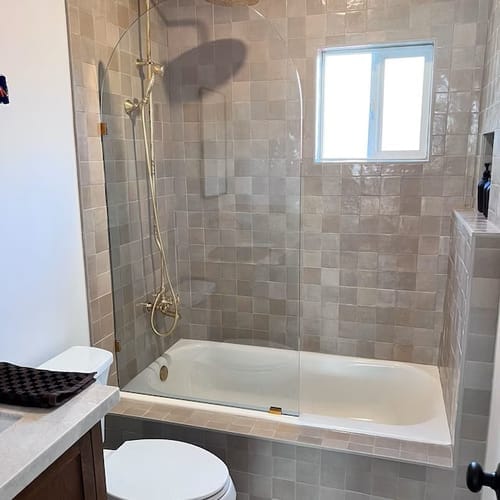
Interior designer Lone Fox demonstrates how to develop a rich patina on unlacquered brass using a simple vinegar method — the same living finish on our unlacquered brass shower system. What takes daily use months to achieve can happen in a few hours. And if you change your mind, a brass polish reverses it completely.
Video by Lone Fox, interior designer and home renovation creator. Shared for reference.
For a full breakdown of what this patina is chemically, the colour stages in detail, and how to protect it long term, see our dedicated brass patina guide.
Is a living finish high maintenance?
Compared to lacquered brass: marginally more. Compared to stainless steel or chrome: about the same. Here is what regular maintenance actually looks like.
For a kitchen faucet used daily, a quick wipe with a damp cloth after use is all it takes most of the time. A monthly clean with warm soapy water removes mineral build-up. That is roughly 2 minutes a week.
What to avoid: anything abrasive or acidic. Scouring pads, vinegar-based cleaners, and bleach products all strip the patina unevenly, leaving blotchy surfaces that are difficult to recover. At the Insideast workshop in Marrakech, each piece is treated with a protective wax before shipping. This slows the very early oxidation phase and lets the patina develop more evenly as it settles in.
To slow aging further, apply a thin layer of Renaissance wax every 3–6 months. To restore the original bright colour, a paste of flour, salt, and white vinegar works reliably, though most customers who have owned unlacquered brass for a year or more no longer want to reverse it.
For the full care method: How to Clean Unlacquered Brass Without Damaging the Patina.

We have a love affair with this Insideast unlacquered brass bridge faucet. This is a living finish that develops patina over time and feels like a timeless addition to the kitchen.
Cove House, on why they chose InsideastThe honest trade-offs: what other brands don't tell you
Most unlacquered brass content is written by people who want to sell it to you or by people who have never owned it. Here are the genuine trade-offs, from real customer feedback across seven years.
- Ages into something genuinely beautiful. No manufactured finish achieves this
- Every piece becomes unique over time
- Solid brass is essentially indestructible under normal use
- If you dislike the patina, you can reverse it
- Suits farmhouse, Mediterranean, mid-century, transitional, and maximalist interiors equally
- Will look different from the product photo within a year. Plan for it
- High-humidity environments (coastal homes, steam showers) age it faster
- Green patina can appear in aggressive environments (rare and reversible)
- Colour appears warmer and richer in person than in photographs
- Needs occasional wiping to manage rate of change
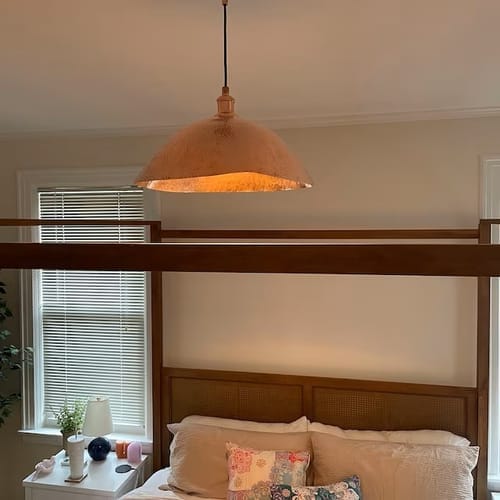
"It does read more rose gold to me than copper in person — just so you know before you order. Still absolutely beautiful and I love it."
This colour expectation gap is real and worth knowing about. We photograph products in natural light to show them as accurately as possible, but brass and copper always read slightly differently in a room than on a screen. In person: warmer, richer, more dimensional.
Where unlacquered brass works best, and where to think twice
Ideal. High daily touch means faster, more characterful patina. Ages into a warm brown-gold within 12–18 months. See our guide to kitchen faucet styles to find the right fit.
Excellent. Lower daily use means slower aging. It takes longer to develop character but lasts just as well.
Works well. Very low touch means slow, even aging. A brass pendant in 5 years still looks close to new.
Yes, with the right expectations. Daily water contact accelerates patina slightly but doesn't harm the fixture. Brandon R.'s shower patina appeared within months and he called it beautiful.
Excellent. Knobs and pulls age from fingertip contact. An organic patina develops exactly where the hand touches most.
Consider solid copper instead. Unlacquered brass outdoors develops green patina faster. Copper handles outdoor environments more gracefully.
A natural fit above the hob. Steam and heat accelerate patina faster than any other kitchen fixture. See the full pot filler installation and sizing guide before planning your rough-in.
A natural fit. Rarely touched, so they age slowly and evenly. Warm brass light over a dining table adds depth that polished finishes never match.
Works well. Heat and smoke accelerate patina, giving fireside brass a distinctly antique character faster than anywhere else in the house.
"My love affair with this faucet is a long story but we're living happily ever after. It's unlacquered brass so it has no protective coating — over time the brass will darken and patina. It's relatively low-maintenance if left alone to age, and we love watching it change."

Why factory-direct changes what unlacquered brass costs
The retail markup on unlacquered brass fixtures is significant. A bridge faucet from a British design house retails at £350–450. A comparable piece from Insideast (solid brass, handmade, same artisan tradition) starts from $130 for single-hole and bathroom faucets, with the full Heritage Bridge Faucet at around $430. The difference is not quality. It is the supply chain.
Insideast is not a retailer. We own and operate the workshop in Marrakech where every piece is made. There is no importer, no European distributor, no retail margin. Each item is carefully and uniquely handled one by one, from the making process through to packaging and dispatch. We ship worldwide using reliable carriers, each order packed with tracking so it arrives safely to your door. Every piece is inspected before it leaves Marrakech, backed by a manufacturer's warranty, not a retailer's promise.
7 years on Etsy. 18,000+ sales. 4.8 stars from 2,600+ reviews. Featured by Architectural Digest, Remodelista, Jenna Sue Design, and Jenna Lyons. The track record exists. It just lives on Etsy rather than in a London showroom.
For our story and how the workshop operates: From Marrakech Workshops to Lone Fox's Home.
If this is the finish for your home, the place to start is the Heritage Bridge Faucet or browse the full faucet collection, handmade in Marrakech, factory-direct pricing, ships worldwide.
Does unlacquered brass age over time?
Yes, unlacquered brass develops a natural patina over 3–18 months depending on environment and use. This is the intended behaviour, not a defect. High-touch fixtures like kitchen faucets age faster; lighting and hardware age more slowly.
The patina is oxidation, the same process that turns copper roofs green over decades. On a household faucet in normal conditions, it produces a warm brown-gold that most people find more attractive than the original bright finish.
Which is better: lacquered or unlacquered brass?
Neither is objectively better. Lacquered brass maintains a consistent, bright appearance but will eventually chip or peel, usually in 5 to 10 years, at which point it looks worse than unlacquered brass ever does. Unlacquered changes from day one but ages in a controlled, beautiful way and never "fails" the way lacquer does.
Choose lacquered if you want your fixtures to look identical in 10 years. Choose unlacquered if you want something that builds character over time.
What are the disadvantages of unlacquered brass?
Unlacquered brass requires regular wiping to manage patina, can develop green spots in very humid or coastal environments, and looks different in photographs versus real life. It will not look the same in 2 years as it does when installed. If you want a static finish, this is not the right choice.
The green patina (verdigris) concern is valid but rare in normal kitchen or bathroom conditions. In coastal homes or steam rooms it can appear, but it is reversible with diluted lemon juice and is not permanent damage to the metal.
Is unlacquered brass mid-century modern?
Unlacquered brass suits many interior styles: mid-century, farmhouse, Mediterranean, transitional, maximalist, and industrial. It is not limited to a single aesthetic.
Aged brass is a historically neutral material. It appeared in Victorian kitchens, Art Deco bathrooms, and 1970s mid-century homes for the same reason it is popular now: warm metal that acquires genuine character over time transcends trends.
Will unlacquered brass turn green?
It can, but it rarely does in normal household conditions. Green patina (verdigris) forms when brass is exposed to high humidity, salt air, or certain cleaning chemicals over extended periods. In a kitchen or bathroom with regular cleaning and drying, this essentially never happens. Read the full explanation of when and why brass turns green for the complete picture.
If it does appear, most commonly around drain rings or in coastal properties, it can be removed with a paste of flour, salt, and white vinegar, or a commercial brass cleaner. It is not permanent damage.
Why do people like unlacquered brass?
Because it ages into something unique. No two pieces look identical after a few years. It builds the kind of character that makes a home feel lived-in and authentic rather than showroom-perfect.
Interior designers and homeowners who choose it often describe the feeling in the same terms: that it looks like it was always there. As Lone Fox put it: "True luxury isn't perfect, it's soulful. Unlacquered brass embodies that."


