


Solid brass and copper sinks, handmade in Marrakech. Browse the undermount and drop-in collection.
The honest answer is that neither installation type is objectively better. Undermount gives you a cleaner countertop line and easier wipe-down. Drop-in is simpler to install, easier to replace later, and works with almost any countertop material. The right choice depends on your countertop, your budget, and how much you mind seeing a rim. Here is the real difference, covered honestly.
- Undermount hides the sink rim beneath the countertop edge for a seamless look. Drop-in shows a visible lip that sits on top of the counter.
- Undermount requires a precisely cut countertop opening and professional installation. Drop-in uses a standard pre-cut hole and is far simpler.
- Undermount wins clearly on cleaning: there is no rim to trap crumbs or water. Drop-in is easier and cheaper to replace if you ever swap sinks.
- Patina develops identically either way. Installation style changes the look of the rim, not how the brass ages.
- Solid stone and solid-surface counters suit undermount best. Laminate is generally not recommended for undermount due to the exposed cut edge.
- What undermount actually means, and why it looks the way it does
- What drop-in means: the traditional installation
- Installation complexity: what your plumber and fabricator actually need
- Which looks better in stone, wood, and laminate countertops
- Cleaning differences: undermount wins on hygiene
- Which Insideast sinks come in each style
- Frequently asked questions
What undermount actually means, and why it looks the way it does
An undermount sink is fixed to the underside of the countertop, with the rim sitting beneath the stone or surface material rather than on top of it. From above, you see the countertop edge running directly into the basin, with no visible lip in between. The sink is held in place with mounting clips or epoxy fixed to the underside of the counter, and the cutout edge is typically polished or finished since it stays visible around the perimeter.
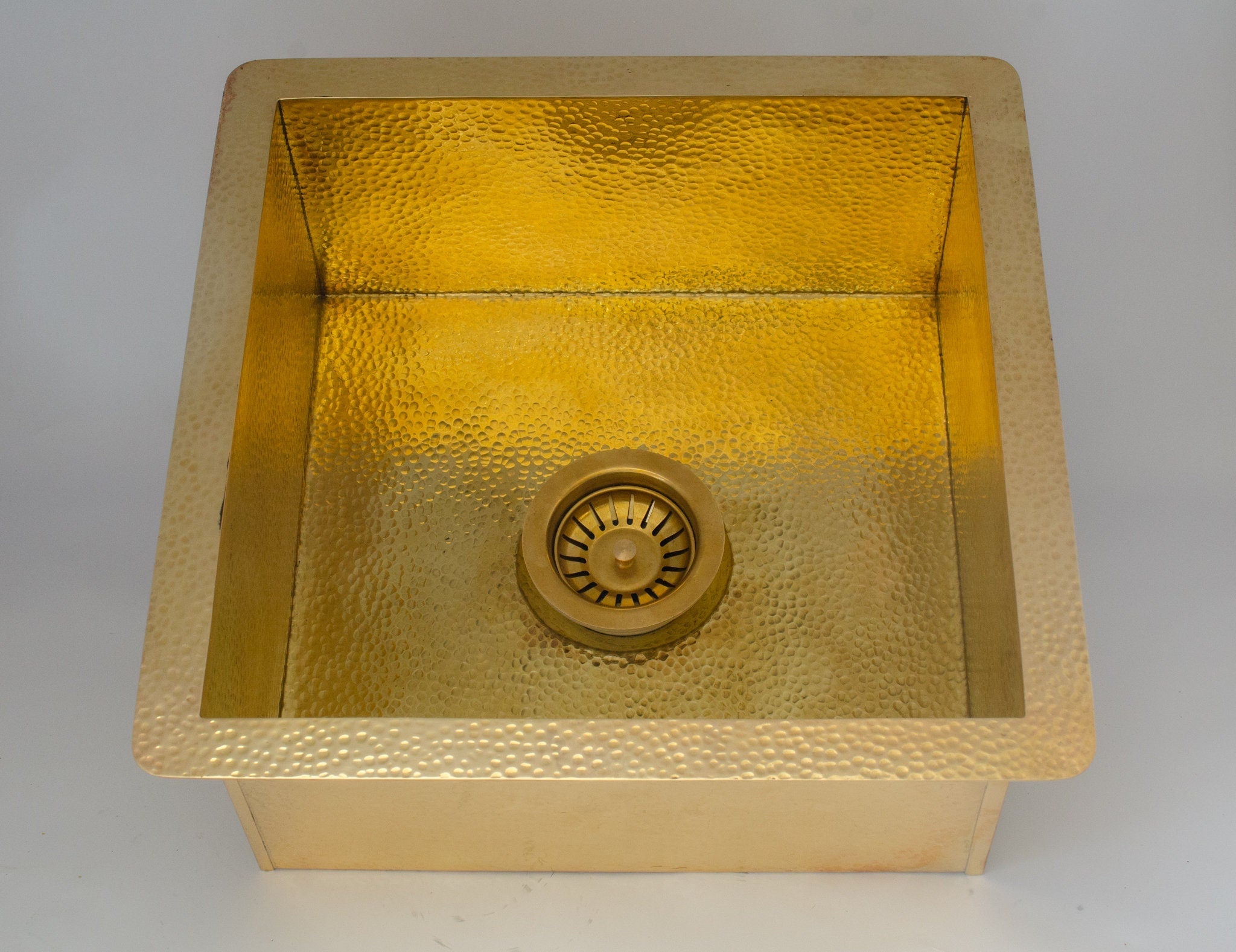
Undermount hammered brass sink. View this sink
The visual case for undermount
One continuous surface, no interruption
Because there is no rim sitting on top of the counter, undermount reads as a single uninterrupted surface from countertop into basin. This is the look most buyers mean when they describe wanting their sink to feel "built in" rather than "added on."
In a solid brass undermount sink, the hammered or smooth surface texture continues right up to the cutout edge, so the transition from stone or wood to metal is the only visible seam in the whole countertop.
Undermount is the more recent installation style in residential kitchens, gaining popularity alongside the move toward solid stone and solid-surface countertops in the past two decades. It is not better engineering than drop-in. It is a different relationship between the sink and the counter, one that depends on the counter being rigid enough and thick enough to support a cutout without a visible lip.
What drop-in means: the traditional installation
A drop-in sink, also called a top-mount or self-rimming sink, has a rim built into the sink itself that rests directly on the countertop surface around a pre-cut hole. The weight of the sink, plus a bead of sealant and sometimes clips beneath, holds it in place. This is the older and still more common installation method worldwide, and it works with virtually any countertop material because the cutout does not need to be load-bearing or precision-finished at the edge; the rim covers it.
The case for drop-in
Simpler, more forgiving, and easier to swap
Because the rim sits on top and covers the cutout, drop-in tolerates a less-than-perfect hole and works on laminate, tile, butcher block, and stone alike. If you ever want to replace the sink, a drop-in comes out and a new one goes in without re-cutting the counter, as long as the new sink shares roughly the same footprint.
The tradeoff is the visible lip itself: a raised seam around the sink where crumbs, water, and grime can collect over time.

A drop-in copper sink with matching brass faucet. The visible rim is the defining feature of this installation style.
External Reference
Drop-in sinks predate undermount by decades; the undermount style only became common once solid synthetic and engineered stone countertops were widely available, since those are the materials that can be cut and finished cleanly enough to hide the rim.
Installation complexity: what your plumber and fabricator actually need
This is where the two methods diverge most in practice, and where most of the cost difference comes from.
Undermount requires
- A countertop fabricator to cut a precise opening before the counter is installed
- The exact sink template, rim profile, and weight in advance
- Mounting clips or epoxy fixed to the underside of the counter
- A polished or finished cutout edge, since it stays visible
- Coordination between fabricator and plumber, usually two separate visits
Drop-in requires
- A standard pre-cut hole matching the sink's outer dimensions
- A bead of plumber's putty or silicone sealant under the rim
- Basic mounting clips from below in most cases
- One plumber, one visit, typically under an hour
- No coordination with a separate countertop fabricator
Because solid brass sinks are heavier than stainless or fireclay sinks of the same size, weight matters more here than it does with most materials. A fabricator cutting an undermount opening needs to know the sink's actual weight and rim profile before cutting, not just its footprint, since the mounting hardware has to support that mass over years of daily use. This is one of the reasons Insideast provides exact weight and dimension specs on every sink product page, and can advise directly on non-standard cutouts where needed.
Every Insideast undermount and drop-in sink can also be customised on request, in size, basin depth, or finish, by contacting customer support before ordering. If your countertop opening does not match a standard sink footprint, exactly the kind of situation that comes up often with undermount retrofits, a made-to-order sink avoids forcing the cutout to fit a stock size.
"Great service! I got a custom sink and the look is awesome. They also provided an extra sink to the factory as the first was slightly different from the picture. I highly recommend."
Which looks better in stone, wood, and laminate countertops
The countertop material you already have, or are planning to install, narrows this decision more than personal taste does.
| Countertop | Undermount | Drop-In |
|---|---|---|
| Solid stone (granite, quartzite, marble) | Ideal. Can be cut and polished precisely; the standard pairing. | Works, but the visible rim is less common with stone in modern kitchens. |
| Solid wood / butcher block | Works if the cut edge is sealed and re-sealed periodically against moisture. | Works easily, and is the more forgiving choice for DIY installers. |
| Laminate | Not generally recommended. The exposed particle-board edge at the cutout can swell if water reaches it. | The standard pairing. The rim fully covers and protects the cut edge. |
| Solid-surface (engineered quartz, etc.) | Excellent. Behaves similarly to stone and is one of the most common undermount pairings. | Works, though less common given how well this material suits undermount. |
In practice, this means the decision is often already made by the counter. If you have laminate, drop-in is the practical answer regardless of preference. If you have solid stone or solid-surface, undermount is available to you, and at that point the decision comes down to whether you want the visible rim or not.
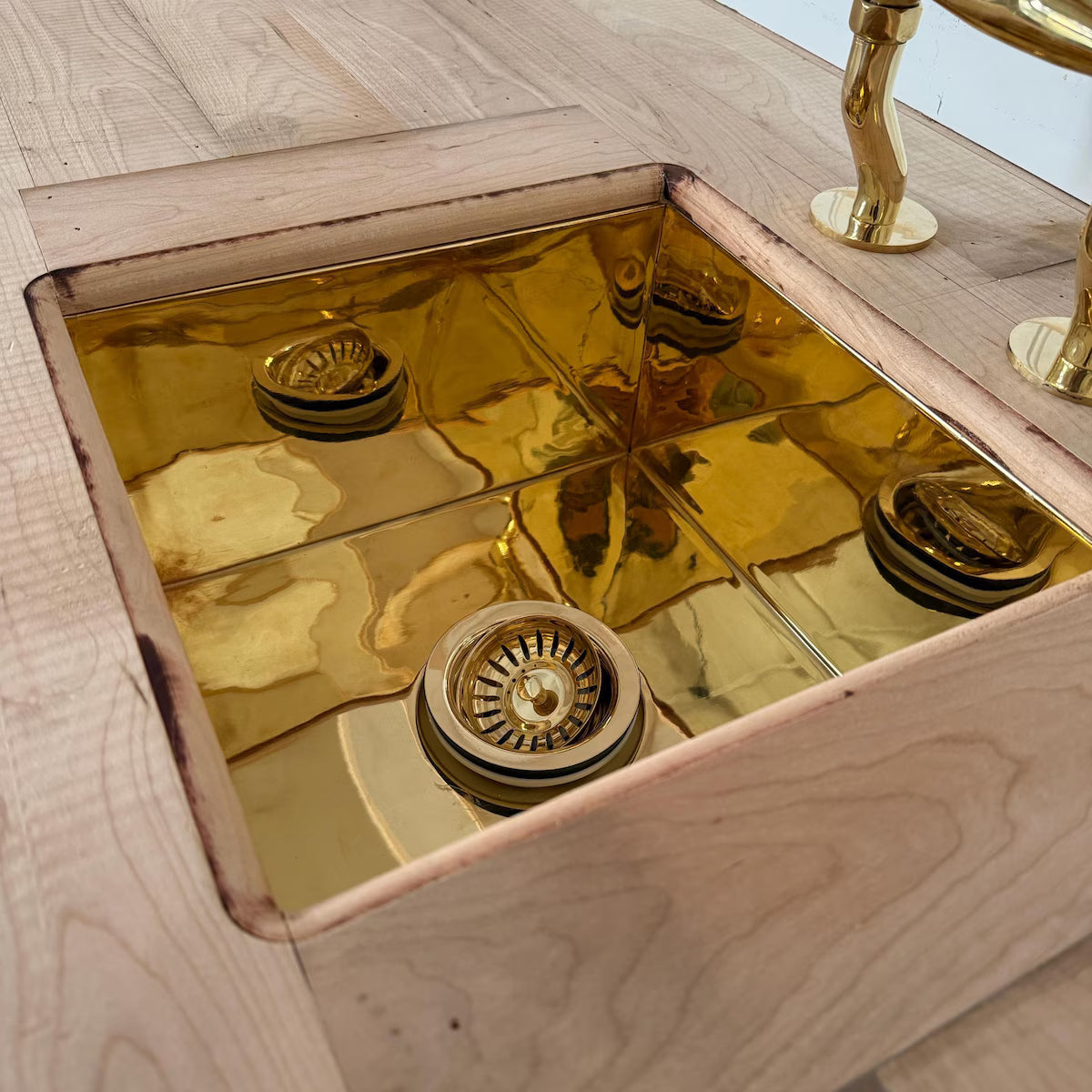
Undermount brass sink beneath a wood countertop.
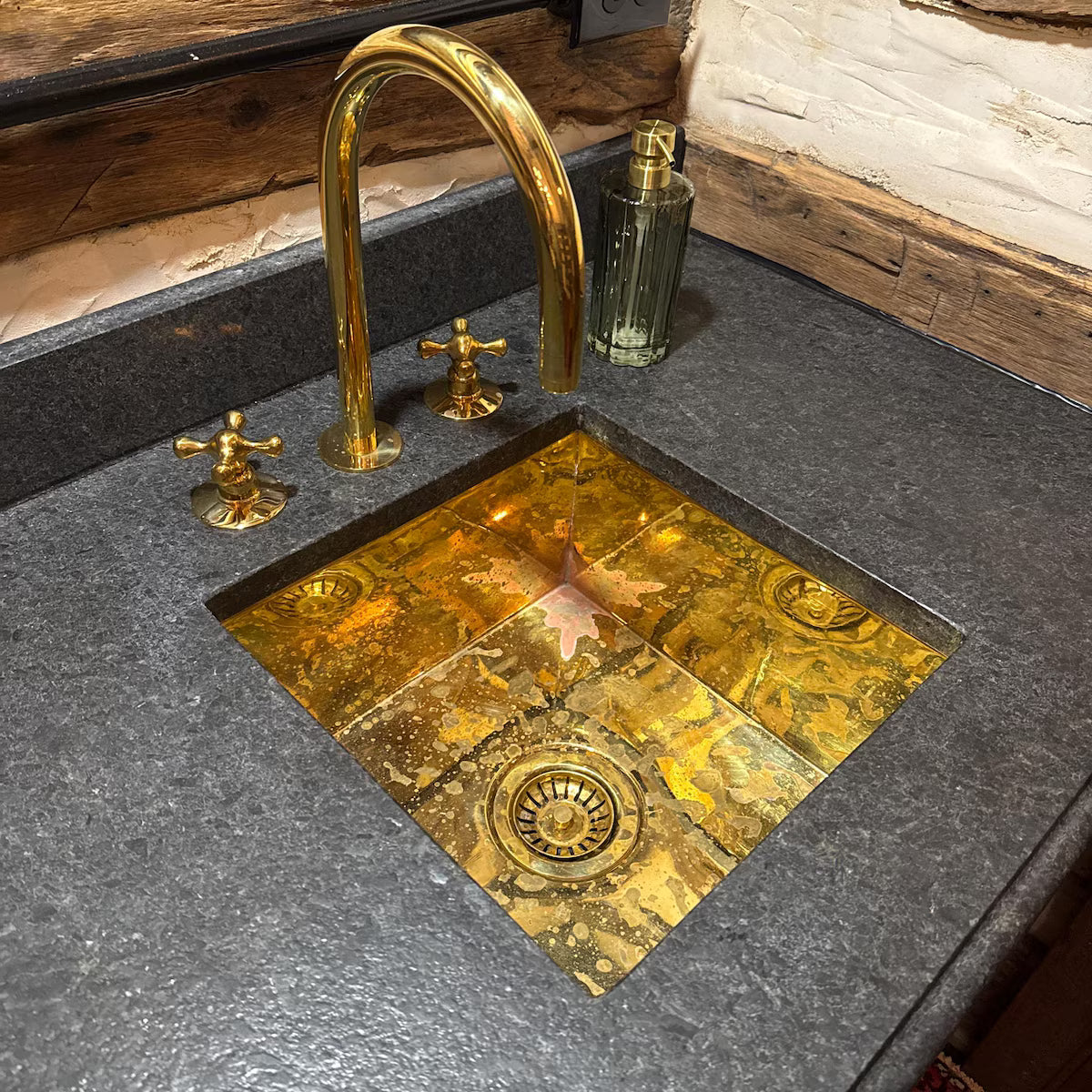
The same undermount sink style beneath marble. View this sink
Both pairings work. The wood counter reads warmer and more rustic against the brass, while the marble creates more contrast between the cool stone and the warm metal. Neither material works against the patina process; an unlacquered brass sink develops the same amber-to-bronze finish over time regardless of what it is set into, a process covered in detail in our guide on how unlacquered brass ages.
Cleaning differences: undermount wins on hygiene
This is the one category where the difference is not subtle. A drop-in sink's rim creates a seam where the countertop meets the metal lip, a natural collection point for crumbs, standing water, and grime that has to be wiped or scrubbed out separately from the rest of the counter. Over years, that seam is also where sealant can degrade first, occasionally needing a re-bead.
An undermount sink has no equivalent seam on the countertop side. You can wipe counter debris directly into the basin in one motion, since there is no lip to catch it first. For a kitchen sink used multiple times a day, this is a meaningful daily convenience, not just a cosmetic preference.
"The sink is beautiful. It is a shallow sink, but works beautifully."

That cleaning advantage applies equally to brass and to any other undermount material. It is not specific to brass, and it does not offset or replace the regular wipe-down that unlacquered brass needs to manage the rate of patina, detailed fully in our guide on How to Clean Brass: We Tested 5 Effective and Easy Methods for You!.
Which Insideast sinks come in each style
Insideast makes both installation types in solid, unlacquered brass, so the choice between undermount and drop-in does not mean choosing a different material or finish quality, only a different mounting method.

Kitchen, bar, island, or outdoor sink. The hammered texture continues to the cutout edge for a seamless undermount finish.
View product
A single-bowl, smooth-finish sink sized for compact kitchens where a hammered texture is not the look you want.
View productFor the drop-in side, the Hammered Oval Brass Sink is Insideast's most established drop-in style, with the same solid construction and hammered texture, set into a self-rimming oval profile that suits vanity and bathroom installations. The petal-etched oval drop-in sink is a smaller, decorative option in the same family, customisable on request. Browse the full undermount and drop-in collection to compare current sizes and finishes side by side.
"Our first package was lost in transit, but Abdel reached out right away and helped us get another sink sent to us at no additional cost. The sink is small but stunning, a character piece that will make a big statement in our house!"

Whichever installation style you choose, every Insideast undermount or drop-in sink can be specified for both setups on request, and customised in size or finish by reaching out to customer support before ordering. Two more notes from buyers who went through that process give a sense of what working with the workshop actually looks like:
Heidi · Verified buyer
- "Wonderful to work with, met my client deadline and was incredibly helpful!"
Christoph · Verified buyer
- "The seller was even willing to check the dimensions of my washbasin in the photo with a tape measure to make sure everything would fit. The basin was manufactured exactly to the requested dimensions."
This article is part of the Insideast sinks series. The companion Brass Kitchen Sink UK Guide covers sizing and UK-specific buying considerations, and Brass Sink vs Stainless Steel covers durability and long-term aesthetics in more depth.
Frequently Asked Questions
Common Questions About Undermount vs Drop-In Brass Sinks
Is an undermount brass sink hard to install?
Not hard, but it is more involved than a drop-in. Undermount installation requires a precisely cut countertop opening, support clips or epoxy fixed to the underside of the counter, and is almost always a two-person job between a countertop fabricator and a plumber. A drop-in sink simply rests in a pre-cut hole and bolts from above, which most plumbers complete alone in under an hour.
What countertop works best with an undermount brass sink?
Solid stone (granite, quartzite, marble) and solid-surface materials are the standard choice, because they can be cut precisely and sealed at the edge against moisture. Laminate countertops are not generally recommended for undermount installation, since the exposed particle-board edge at the cutout can swell if water gets behind it. Butcher block and solid wood can work for undermount if the edge is properly sealed and re-sealed periodically.
Can a brass sink be undermounted?
Yes. Solid brass has the mass and structural rigidity to be undermounted safely, the same way solid stone or cast iron sinks are. What matters is that the countertop fabricator knows the sink's exact rim profile and weight before cutting, since brass sinks vary in lip design and are typically heavier than stainless undermount sinks of the same size.
Does undermount or drop-in affect how brass patinas?
No. The patina process is identical either way. Unlacquered brass darkens from bright gold into amber, brown, and bronze tones based on air exposure, water chemistry, and handling, not on how the sink is mounted. The only visual difference installation style creates is the visible rim: a drop-in shows a raised lip around the sink, while an undermount hides the rim beneath the counter edge.
Is undermount more expensive than drop-in?
The sink itself is not necessarily more expensive, but the installation typically costs more, since undermount requires a custom-cut countertop opening, mounting hardware, and more skilled labor. A drop-in sink uses a standard pre-cut hole and simpler hardware, which keeps installation cost and time lower.
Every sink in this guide is handmade in the Insideast workshop in Marrakech, in solid, unlacquered brass. Browse the undermount and drop-in brass sink collection, or get in touch via the customisation page if your countertop cutout needs a non-standard size.


