


Solid brass vessel sink, handmade in Marrakech. Browse the brass vessel sink collection.
A brass vessel sink is a bowl that sits on top of the counter rather than being set into it, and that single difference changes three things buyers usually get wrong: the counter height, the faucet, and how the sink actually gets cleaned day to day. Get the height right and pair it with a faucet built for the job, and a vessel sink is one of the easiest statement pieces to live with. Here is what to know before you order one.
- A vessel sink adds four to six inches of height on top of the counter, so the counter itself needs to sit lower than a standard vanity to keep the rim comfortable.
- Hammered and smooth finishes age the same way, but hammered texture hides early unevenness in the developing patina, while smooth shows it faster.
- A standard short vanity faucet will not clear a vessel bowl. It needs a taller vessel-specific or wall-mounted faucet.
- Many vessel sinks use overflow holes instead of a built-in stopper, so check before ordering and use a stopper with a drain hole, not a solid one.
- Powder rooms suit the boldest hammered and antique finishes since they see lighter daily use than a full family bathroom.
- What a vessel sink is and why it makes a design statement
- Hammered vs smooth vessel sinks
- Counter height adjustment: the number most guides get wrong
- Which faucets pair correctly with a vessel sink
- Cleaning a vessel sink: easier than you think
- Brass vessel sink in bathroom vs powder room
- Frequently asked questions
What a vessel sink is and why it makes a design statement
A vessel sink is a self-contained basin that rests entirely above the countertop, connected only through a single drain hole. Unlike an undermount or drop-in sink, none of the bowl is recessed into the counter, so the full shape, texture, and finish of the sink stays visible at all times. That visibility is the entire point: a vessel sink is chosen to be looked at, not hidden beneath a counter line.
That visibility also opens up installations that would not work with a recessed sink. Because a vessel sink only needs a single drain hole rather than a cut basin, it can be set into surfaces a standard sink never touches, including reclaimed furniture.
"I absolutely love how this 1800's oak dresser, a beautiful hand crafted brass sink & matching faucet created my one-of-a-kind bathroom vanity. Thank you for offering these hand crafted brass pieces of art. Great communication & shipping. Highly recommended!"
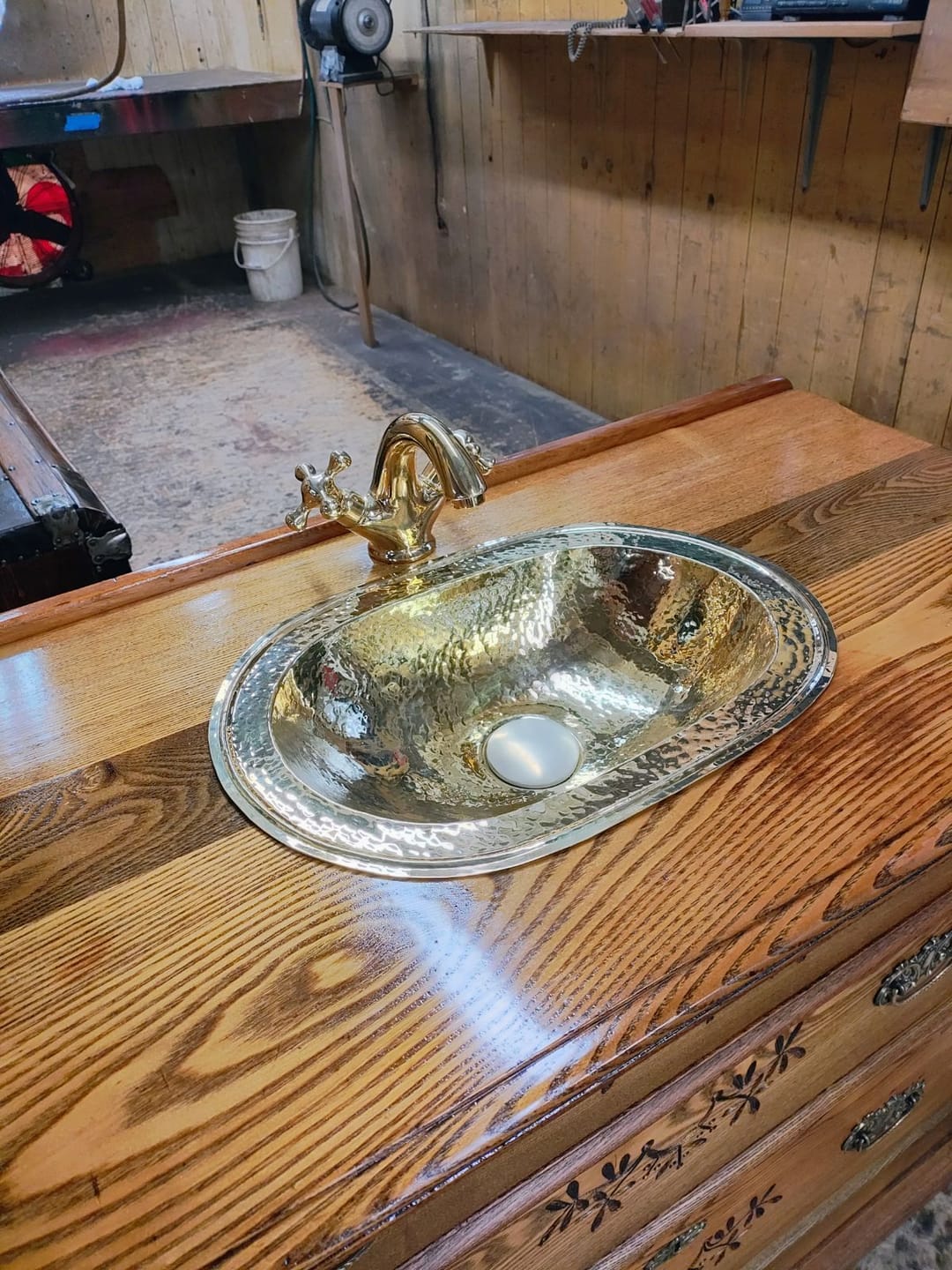
Turning an antique dresser into a vanity base only works because the sink sits on top rather than needing a supported cutout underneath, which is exactly the flexibility a vessel sink offers over a recessed one. This is why vessel sinks show up so often in powder rooms and guest bathrooms built around a piece of furniture rather than a stock vanity cabinet.
Hammered vs smooth vessel sinks
Both finishes are solid brass or copper and patina identically over time. The difference is how each one carries light and texture while that patina develops.

Hammered copper vessel sink. View this sink
Hammered finish
Texture that hides the early stages of patina
A hand-hammered surface catches light unevenly by design, which means the first blotchy weeks of a developing patina blend into the existing texture rather than standing out as uneven color. This is why hammered brass and copper are the more forgiving choice for buyers nervous about the early, uneven look of a living finish.
The tradeoff is that a hammered basin has more recessed texture for water and residue to sit in, though this is a minor difference in practice, covered in the cleaning section below.
Smooth finish
A cleaner line, and a faster-reading patina
A smooth-surface vessel sink shows its patina more visibly and evenly, since there is no texture to break up the color shift. Buyers who want to watch and document the aging process, or who prefer a more architectural, minimal look, tend to choose smooth over hammered.
Smooth basins are also marginally faster to wipe down, since there is no recessed texture at all.

Smooth-finish round brass vessel sink. Browse vessel sink finishes
"Beautiful sink! Well made and nice craftsmanship. Will upload picture once installed!"

Counter height adjustment: the number most guides get wrong
Most online guides quote a single "standard vanity height" and stop there. That number is correct for a recessed sink and wrong for a vessel sink, because a vessel bowl adds its own height on top of whatever the counter measures.
A vessel sink typically stands four to six inches tall. If you install one on a standard 32 to 36 inch vanity counter without adjusting anything, the sink rim ends up somewhere between 36 and 42 inches from the floor, uncomfortably high for most adults and well above the point where a standard faucet can reach it properly. The correction is to lower the counter itself, not to compensate at the faucet.
| Element | Typical measurement |
|---|---|
| Standard vanity counter (recessed sink) | 32 to 36 inches from floor |
| Vessel sink bowl height | 4 to 6 inches |
| Recommended counter height for a vessel sink | 28 to 32 inches from floor |
| Resulting rim height once the bowl is added | 33 to 36 inches from floor |
In practice, this means telling your cabinet installer or countertop fabricator the sink's exact height before the vanity is built, not after. If you are working with an existing vanity that was built for a recessed sink, check its height against the table above before ordering; a vessel sink on an unmodified standard-height vanity is the single most common installation mistake buyers report.
Which faucets pair correctly with a vessel sink
The same math that applies to counter height applies to the faucet. A basic short faucet built for a recessed basin often cannot clear a vessel rim, or clears it at an angle too low to fill or drain comfortably. Two mounting styles solve this correctly, and they solve it in different ways.

Mounted on the wall above the sink rather than on the counter, which sidesteps the height math entirely and works with almost any vessel bowl.
View product
Installed on the same countertop surface as the sink, not the wall. Its raised body is built to clear a vessel bowl from that lower deck position.
View productWhichever style you choose, confirm the faucet's spout height against your specific sink's bowl height before ordering, since vessel bowls vary in depth by a couple of inches across styles. Insideast lists exact dimensions on every sink and faucet product page for this reason.
Cleaning a vessel sink: easier than you think
Because the entire basin sits above the counter with nothing recessed, there is no hidden lip or cutout seam for grime to collect in the way there is with an undermount or drop-in sink. A soft cloth wipe handles day-to-day cleaning on both hammered and smooth finishes, and the same patina-safe cleaning approach used on any unlacquered brass fixture applies here.
One detail buyers frequently miss: many vessel sinks, hand-hammered styles especially, are built with small overflow holes in the basin instead of a built-in pop-up stopper.
"Lovely sink, looks just as shown. Heavy and quality brass. It does not come with a stopper, so be sure you use a stopper that has a drain hole in it, as the sink has 3 small overflow holes in it."

Carolyn's note above is the single most useful piece of practical advice in this guide: check whether your sink includes a stopper, and if it does not, use a stopper designed with its own drain hole rather than a solid one, which would block the overflow function the holes are built for.
Brass vessel sink in bathroom vs powder room
The same sink behaves differently depending on how often it gets used, which changes which finish and style makes sense in each room.
Powder room
- Lower daily use means the boldest hammered, antique, or engraved finishes work well without worrying about wear
- Guests see it, but do not use it multiple times a day, so it can be a true statement piece
- Furniture-as-vanity setups, like an antique dresser, suit powder rooms especially well
Full bathroom
- Higher daily use favors a smoother finish for faster wipe-down between uses
- Counter height adjustment matters more here, since the sink gets used by different family members throughout the day
- A more compact vessel profile helps preserve usable counter space for daily routines
Either way, a vessel sink pairs naturally with the small accessories that finish a bathroom vanity, soap dishes, tumbler holders, and towel hooks in the same unlacquered brass or copper. Browse holders and caddies to keep the finish consistent across the whole vanity, not just the sink and faucet.
For sizing and buying considerations beyond the vessel style specifically, the Brass Kitchen Sink UK Guide and Undermount vs Drop-In Brass Sink guides cover the two recessed alternatives to a vessel installation in detail.
Frequently Asked Questions
Common Questions About Brass Vessel Sinks
What height should a vessel sink be installed at?
A vessel sink sits four to six inches above the counter, so the counter itself needs to be lower than a standard 32 to 36 inch vanity height to keep the rim at a comfortable washing level, typically 28 to 32 inches for the counter surface, with the sink rim landing around 33 to 36 inches from the floor once the bowl is added.
Are brass vessel sinks easy to clean?
Yes. A smooth-finish brass vessel sink wipes clean with a soft cloth in seconds, and a hammered finish only needs slightly more attention in the recessed texture. Neither requires special cleaning products beyond what unlacquered brass generally needs to manage the rate of patina.
Best faucet for a brass vessel sink?
A wall-mounted faucet or a deck-mounted single-hole faucet built for vessel use, not a basic short faucet made for a recessed basin. A wall-mounted faucet sidesteps the height issue entirely by mounting above the sink, while a deck-mounted vessel faucet has a raised body designed to clear the bowl from the counter.
Does a vessel sink need a special stopper?
Often, yes. Many vessel sinks, including hand-hammered brass and copper styles, are made with small overflow holes built into the basin rather than a built-in pop-up stopper. Buyers should check whether their sink includes a stopper and, if not, use a drain-hole stopper rather than a solid one that could block the overflow function.
Can a vessel sink be installed without a plumber?
The sink itself is simple: a single drain hole and a bead of silicone hold it to the countertop, which is well within reach of an experienced DIYer. Connecting the drain to existing plumbing and confirming the water supply lines reach a taller faucet, however, is where most people bring in a plumber, particularly if the vessel faucet is wall-mounted.
Every vessel sink shown here is handmade in the Insideast workshop in Marrakech, in solid, unlacquered brass or copper. View brass vessel sinks, or pair one with a matching faucet from the bathroom faucet collection.


